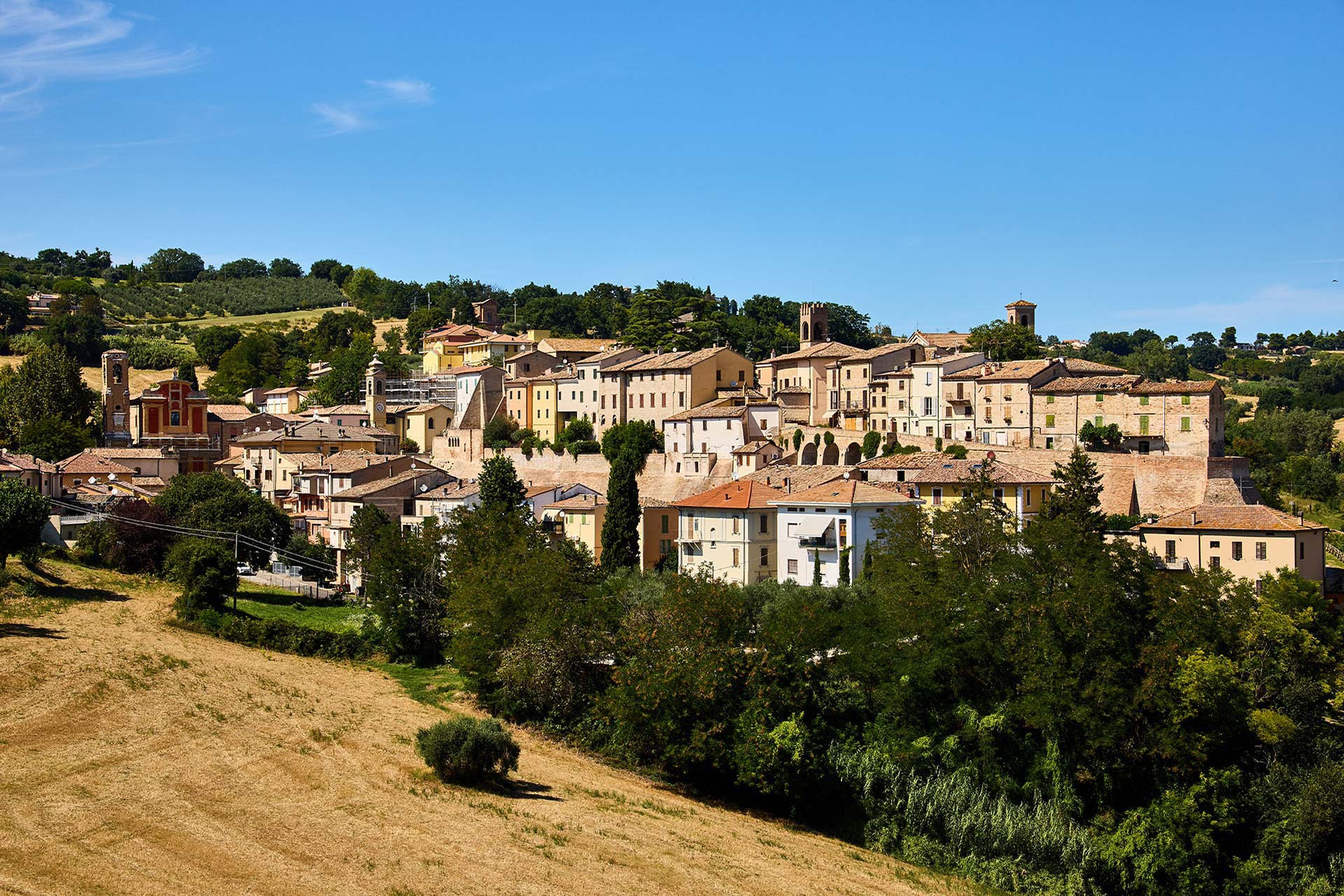
With this city tour, you can discover all the places that characterize Colli al Metauro.
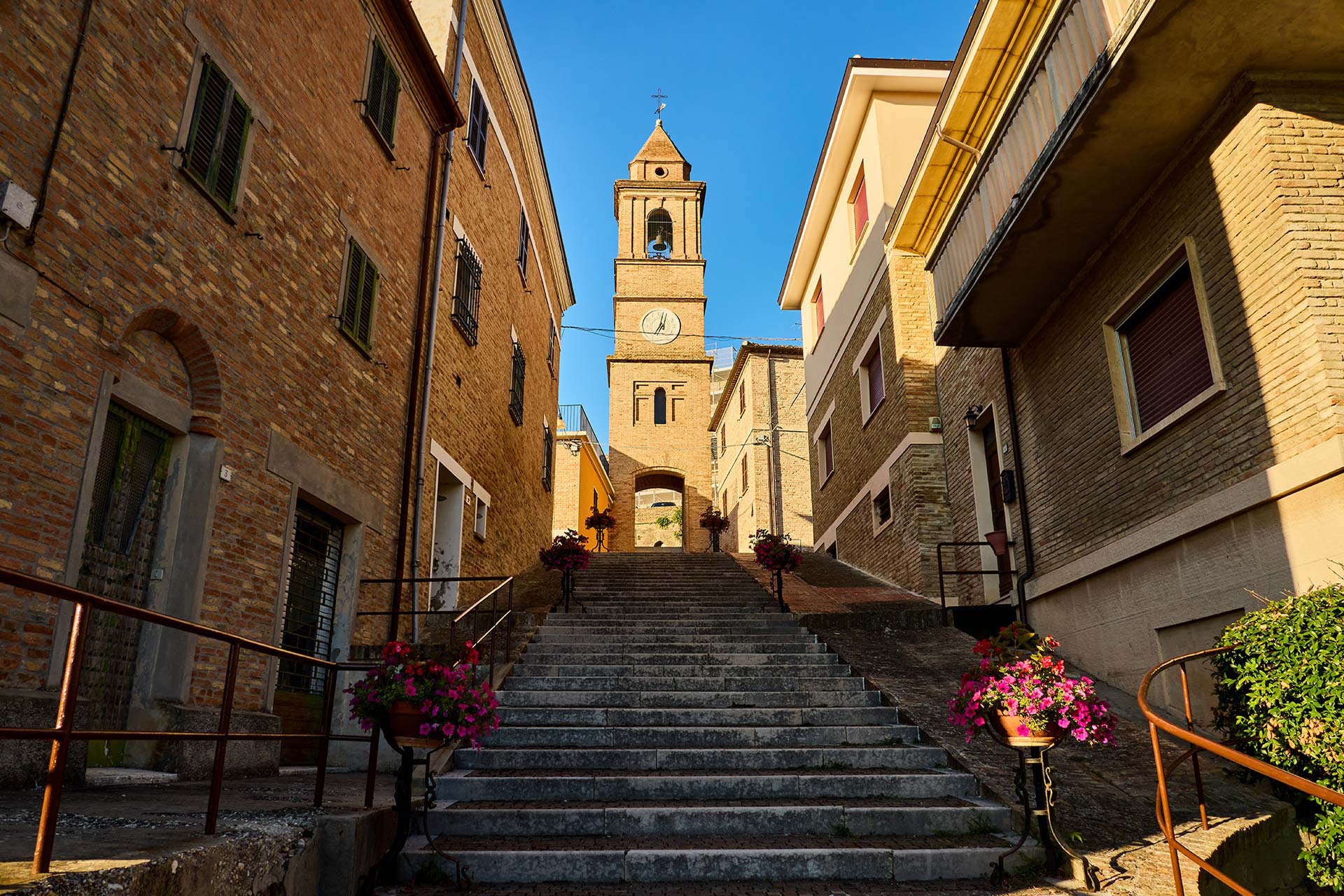
MONTEMAGGIORE AL METAURO
Montemaggiore al Metauro is a hamlet of Colli al Metauro, a municipality with more than 12,000 inhabitants in the province of Pesaro and Urbino, established on 1 January 2017 following the merger of the municipalities of Montemaggiore al Metauro, Saltara and Serrungarina. The castle of Montemaggiore dominates the Metauro valley from a prominent wooded hill, with its two picturesque spired bell towers. An ancient settlement of early medieval origin, formerly owned by the Benedictine abbey of San Paterniano in Fano, Montemaggiore was one of the defensive bastions of the Malatesta coastal territory against the Feltre hinterland, until Federico da Montefeltro seized it from Sigismondo Malatesta in 1462. It then followed the vicissitudes of the Duchy of Urbino until its devolution in 1631. In 1944, Allied generals Alexander and Leese, together with British Prime Minister Winston Churchill, climbed up to Montemaggiore to observe the Gothic Line (a defensive line built by the Germans to slow down the advance of the Anglo-American Allies) from the top of its walls. In reference to this historic event, the “Museo Storico del Fiume” (River History Museum) has been set up in the former church of S. Maria del Soccorso, which houses numerous historical artefacts, military equipment and official documents.
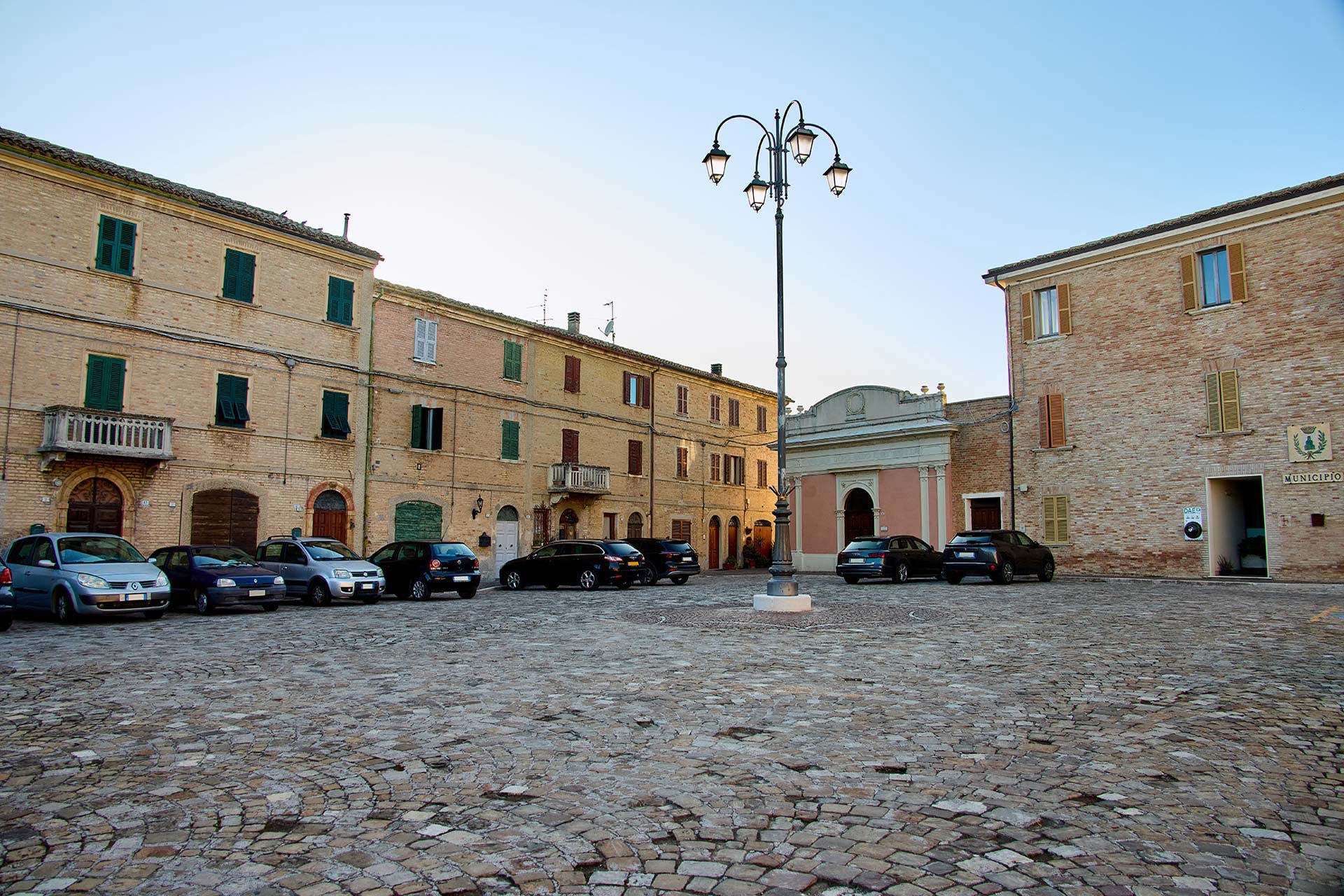
ITALIA SQUARE - MARFORI PALACE - MUNICIPAL THEATRE
An eighteenth-century palace, now the town hall of Montemaggiore al Metauro. The eighteenth-century building retains vaulted ceilings with reliefs.
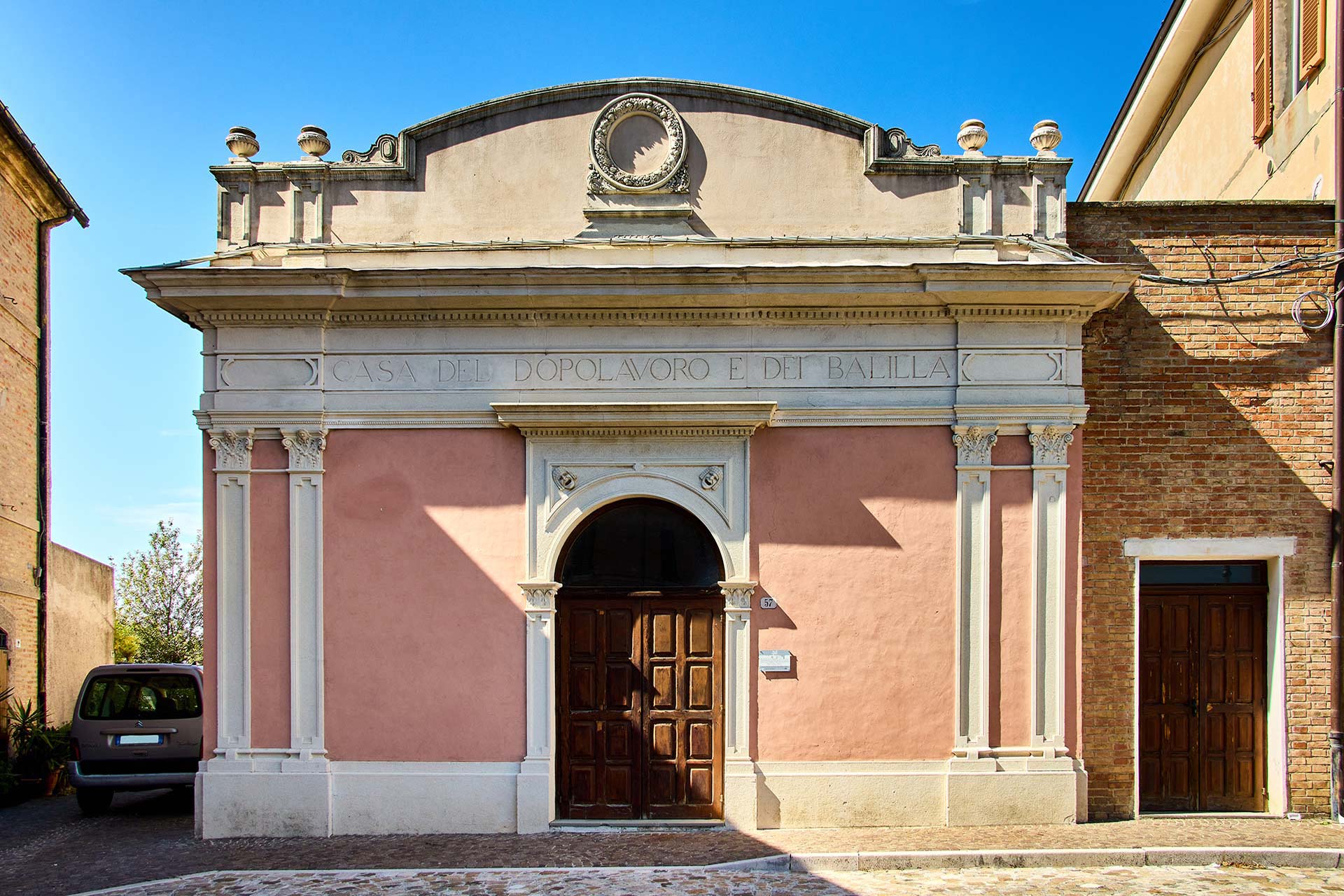
Municipal Theater - Casa del Dopolavoro
Municipal Theatre - Built in 1929 as a leisure centre and clubhouse, it still retains its main structural and architectural features. Built in 1929 as the ‘Casa del Dopolavoro e dei Balilla’ (House of After-Work and Balilla), over the years it was used as a theatre, a ballroom and, when necessary, even as a cinema. The 12,000 lire raised by a public subscription contributed to the costs, with citizens eager to put their hands in their pockets as the fever for novelty grew. The work took less than a year, a pace that would be unthinkable today, but this did not compromise its solidity. However, it did open up gaps in the budget, which was set at a ceiling of 18,500 lire but ultimately had to yield to the reality of the actual cost: 49,000 lire. The interior decorations, scenery and surroundings were the work of Augusto Guidi of Fano. Recently renovated, it is used as a theatre and conference hall.
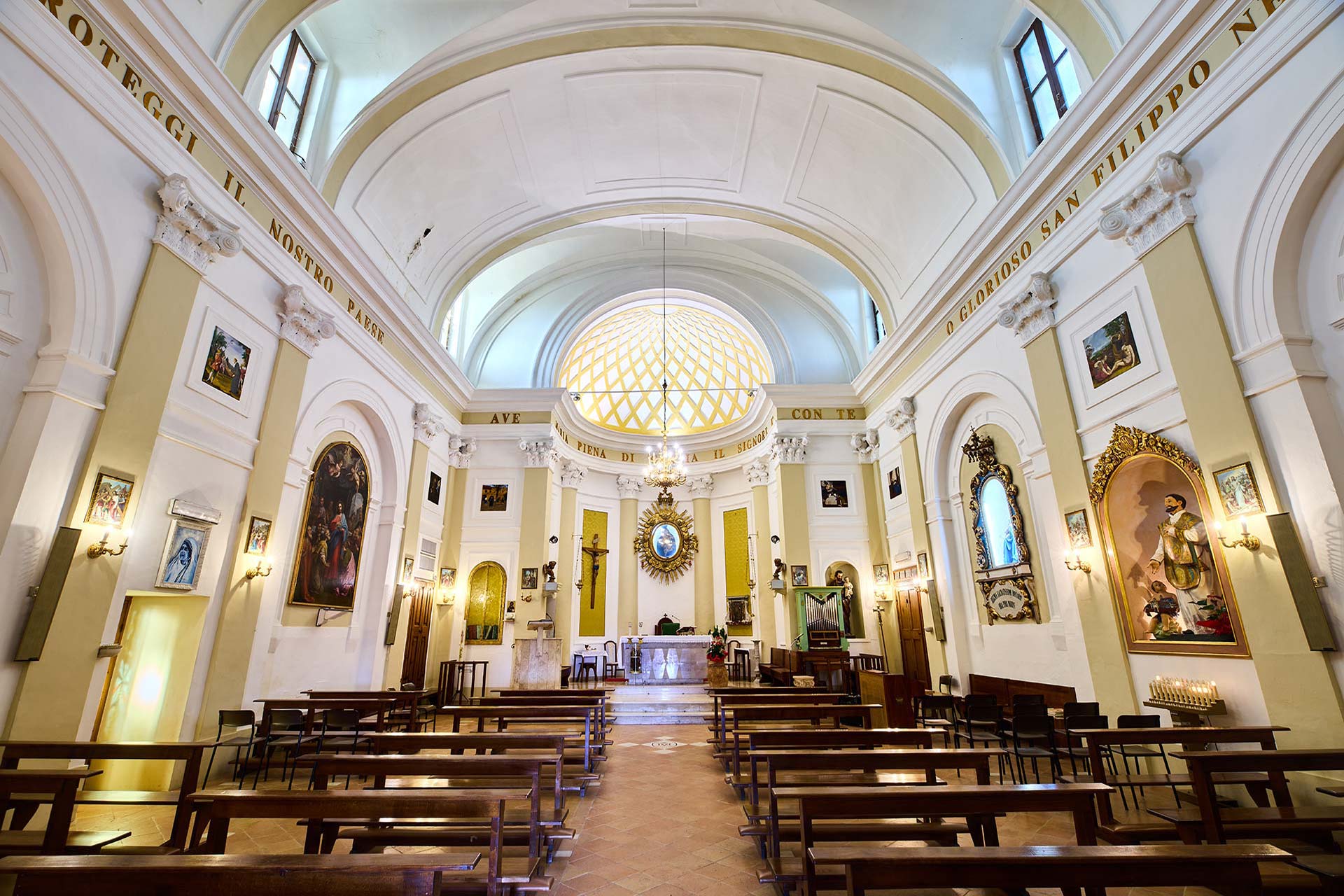
CHURCH OF SANTA MARIA DEL SOCCORSO
The archiectonic style from which the church is inspired is clearly neo-Gothic. A few steps and a short side ramp lead to the small churchyard in front of the church entrance. The wall structure made of brick elements is completely plastered both inside and outside.The gable-roofed façade is primarily characterized by the presence of a portal with an ogival arch on slender fluted columns and a poly-lobed rose window with small columns that connect at the center. Between these, two panels depicting a half-bust of Saint John the Baptist and an Angel showing an open book are placed. The façade concludes with blind merlons of ogival arches on small columns that follow the slope of the roof eaves. The buttress-pillars, starting from the corners of the main façade and aligning along the church's sides up to the apse, not only balance the thrust of the walls but also serve as an architectural motif. Between the buttresses are tall, splayed pointed-arch windows with stained glass. A bell-gable rises at the back on the left, where the apse is located. The building housing the sacristy and the rectory is attached to the church, set back on the left. The Gothicizing motif of the ogival arch is consistently found inside the church in the ribbed vaults covering the single nave and in the three large arches that divide the nave into three bays, with the central one being wider. Of note on the left wall is a painting from the early 17th century depicting the Madonna of the Rosary, attributed to Silvio Ariani. The inner facade is essentially characterized by a glazed vestibule with a wooden frame and the stained glass of the rose window. On the opposite side is the presbytery, elevated by three steps from the nave, with a polygonal apse covered by segmented basins.
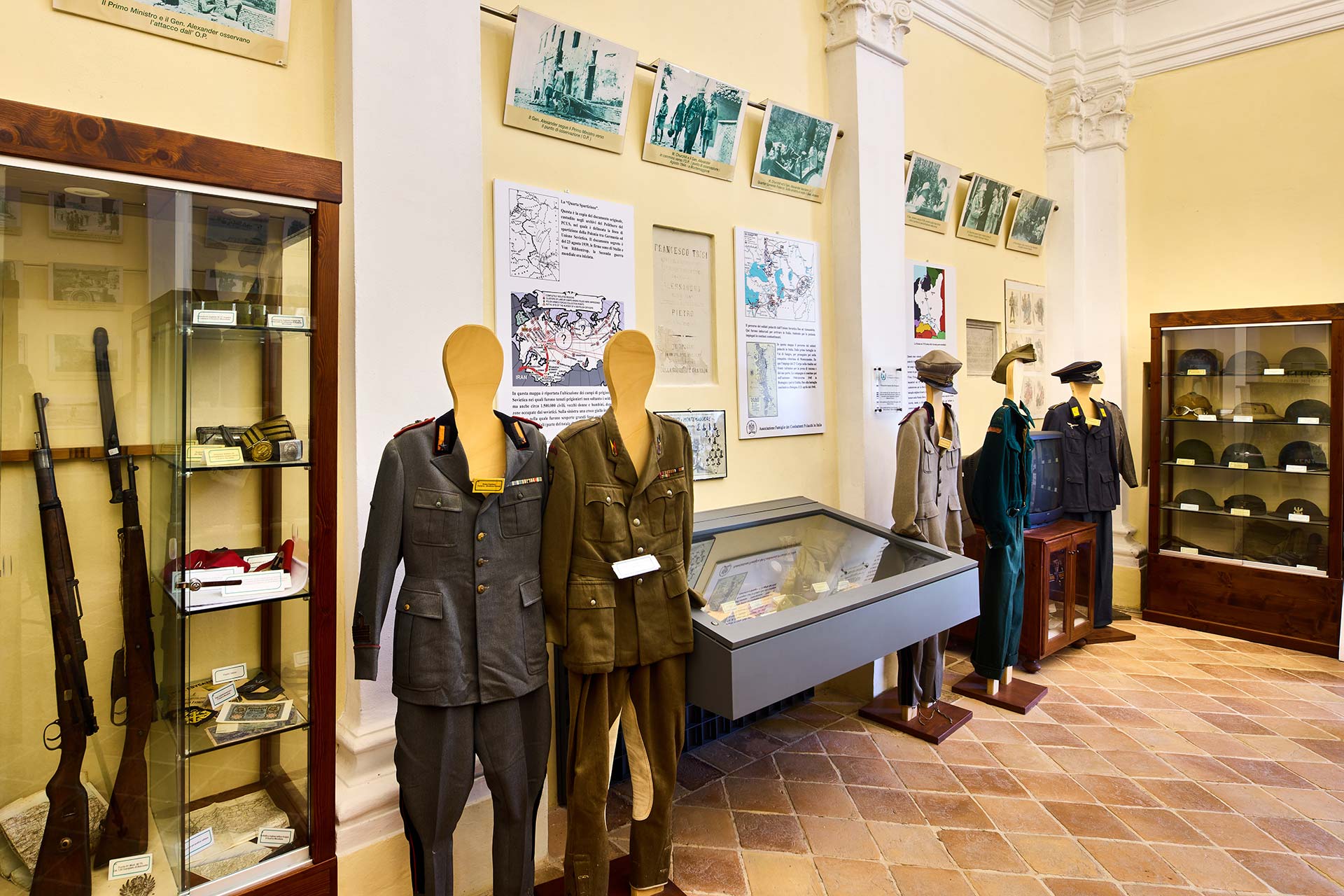
WINSTON CHURCHILL CIVIC AND ENVIRONMENTAL MUSEUM OF THE METAURO RIVER
The museum housed in the former church of Santa Maria del Soccorso (17th century) - located on Via Roma, collects photographs, written accounts, diaries, official documents, and historical sources dating back to World War II. In particular, one can see photos referring to the morning of August 25, 1944, when Winston Churchill, observed from a strategic vantage point in Montemaggiore the deployment of troops in the Metauro Valley ready for the offensive on the Gothic Line.
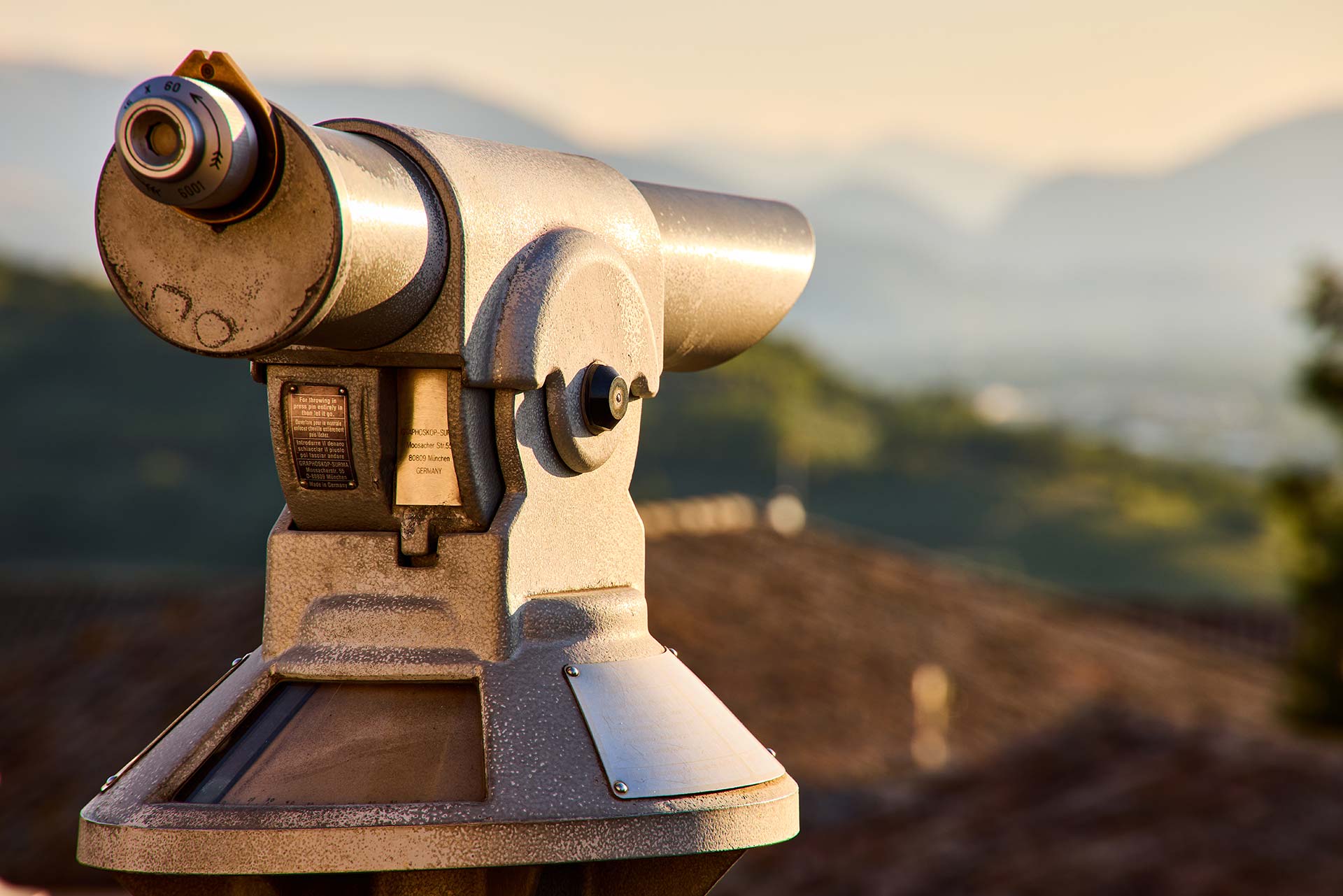
CHURCHILL VIEWPOINT
Panoramic viewpoint of the Mirador wall from which, in the summer of 1944, British Prime Minister Winston Churchill observed the advance of the 8th Army commanded by General Leese. On August 26, at 10:45 a.m., British Prime Minister Churchill had a dramatic meeting with General Anders at the Polish headquarters located in the Vallone di Senigallia area. From there, at 11:45 a.m., he departed with General Alexander for Montemaggiore al Metauro, from whose walls he observed the advance of the 8th Army commanded by General Leese. Churchill himself spoke of his arrival in his Memoirs... "...From the centuries-old parapets, one could enjoy a truly magnificent view: one could encompass the entire front of the Eighth Army's offensive... At this point, news arrived that the troops had advanced two or three kilometers beyond the Metauro. Hasdrubal's defeat on its banks had sealed the fate of Carthage; so I proposed that we too should go beyond the river..." Also important are the testimonies of local citizens: - The parish priest of Montemaggiore, Don Fortunato Minardi, from whose diary on August 25th (the date does not coincide with that of historians who agree on August 26th) he describes... 2 illustrious guests: on Friday, August 25th, distinguished personalities arrived incognito, in luxury cars, among whom Churchill, British Prime Minister, and Alexander, Chief of Staff, were identified, followed by the secret police. - Mrs. Maria Scarpetti "Our house was located on a hill called Monte Pulito, from which we could see the entire Metauro Valley. It was August 1944, and up until that point, nothing serious had happened. The Germans had chosen our house as a camp.... A few days before the British launched their offensive, the Germans left.... Once the Germans had left, one morning the British jeep arrived. From a distance, I saw two generals accompanied by soldiers; one of them was very tall, and I later learned that it was General Alexander. .... At a certain point, another jeep arrived. The generals stood up, went down the stairs, and approached a somewhat stout man with a cigar and a large hat... - Partisan Nello Iacchini, in a letter dated December 18, 1974, addressed to the national president of the ANPI, Arrigo Boldrini, recounts the episode for which he had earned the Patriot's Certificate signed by General Alexander. …At dawn on August 26, the Allied armored troops and infantry began to advance rapidly, but bombs continued to fall on the main road just outside Saltara. At first, we thought it was a German counteroffensive, but we soon identified the point from which the bombs were being launched. Having surrounded the area, we found, in the middle of a vineyard, a completely isolated German soldier, equipped with a mortar and ammunition. We captured him and handed him over to a British officer….. We saw two jeeps approach, which stopped 50 meters away from us; three Canadian officers got out of the first and came towards us, weapons in hand. One of them, kindly and in perfect Italian, told us that our task was finished and disarmed us. When the second jeep passed us, we recognized General Alexander and Winston Churchill in it, who was waving to us, much to our surprise, since we were still bitter about having been disarmed.
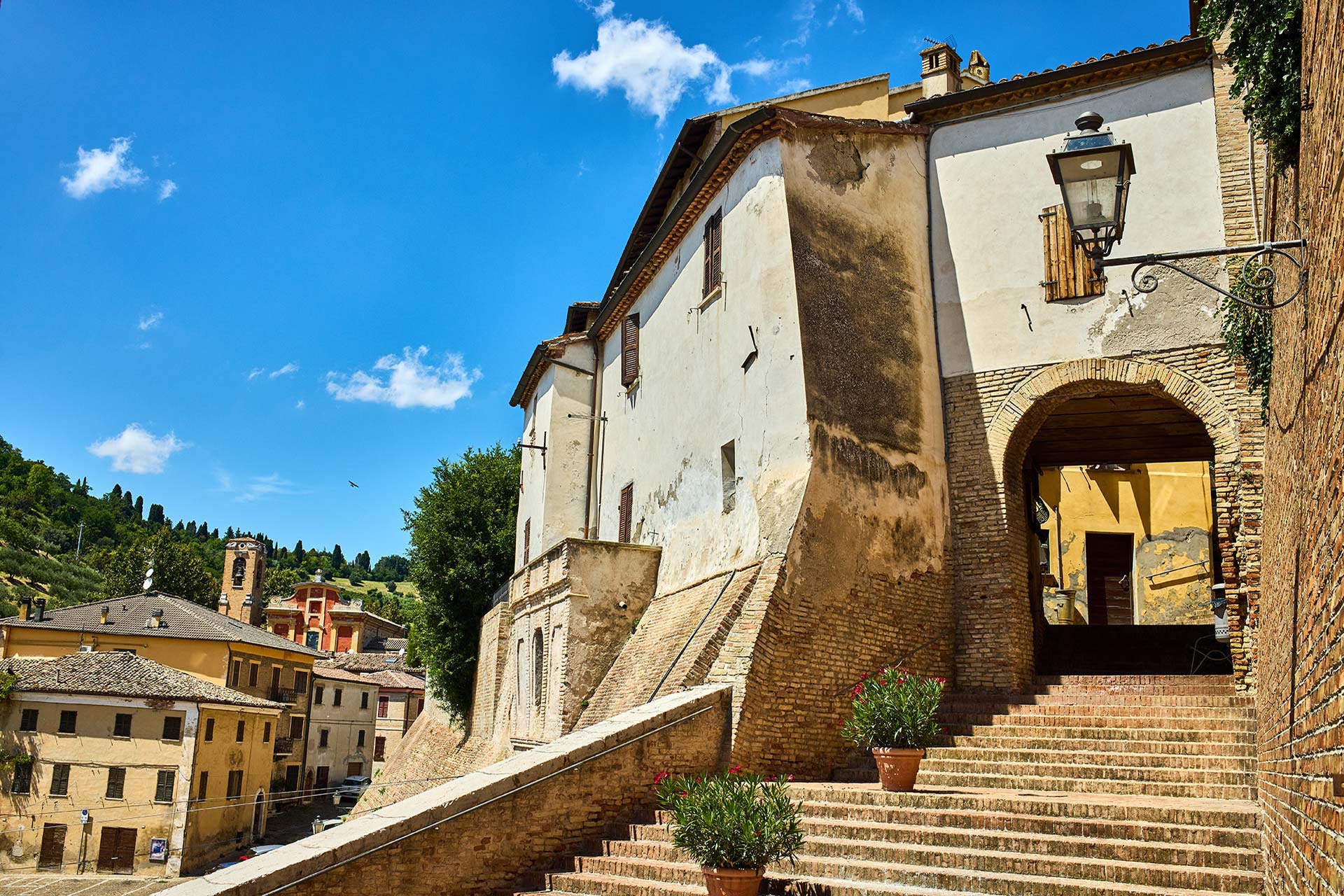
HISTORIC VILLAGE OF SALTARA
Saltara is the village where science meets the Middle Ages. If Montemaggiore is history and Serrungarina is agriculture, Saltara is knowledge. Its name itself has an ancient and debated origin (perhaps linked to sacred groves or the guardians of the pastures), but today it is known throughout Italy for a villa that has changed its use dramatically: from a noble residence to one of the most important interactive science museums in the country. It's a must-see for those traveling with children or for those who want to experience the laws of physics firsthand after touching the stones of history.
CHURCH OF THE FONTE
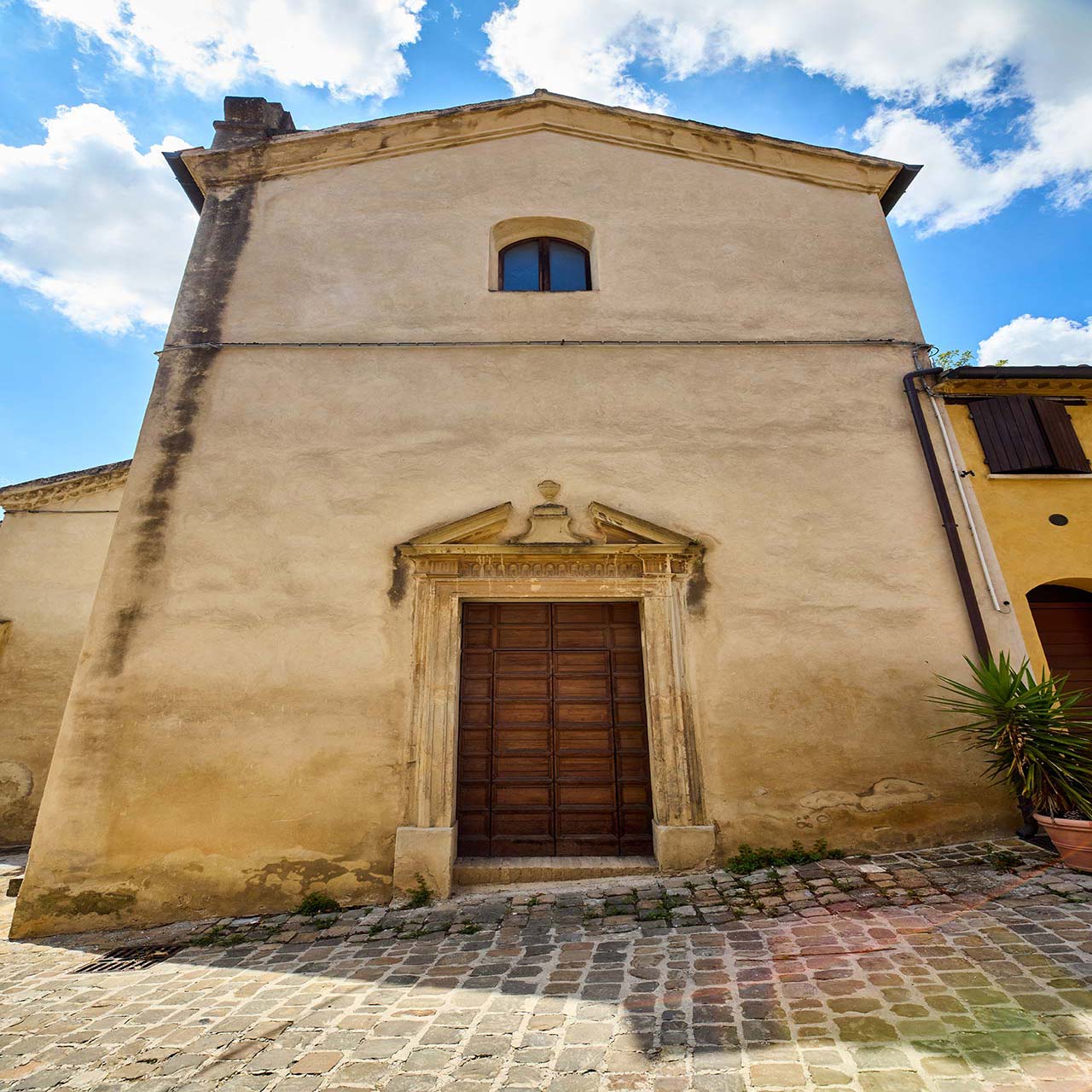
The church, a small building with a single nave and two side chapels, stands just outside the walled centre of Saltara.The former ‘Church of the Spring’ was built right on top of a spring. It houses Baroque artworks and two beautiful frescoes (1470) by Giovanni A. di Bellinzoni. It houses a permanent exhibition of objects related to daily life and local customs, which bridge the sacred and the profane, uniting faith and local culture. Among these, the statue of the ‘Dead Christ’ from 1847 stands out. It is the protagonist of the Good Friday Procession, which is re-enacted every year in this village, keeping alive a medieval tradition of profound devotion.
CHURCH OF THE GONFALONE
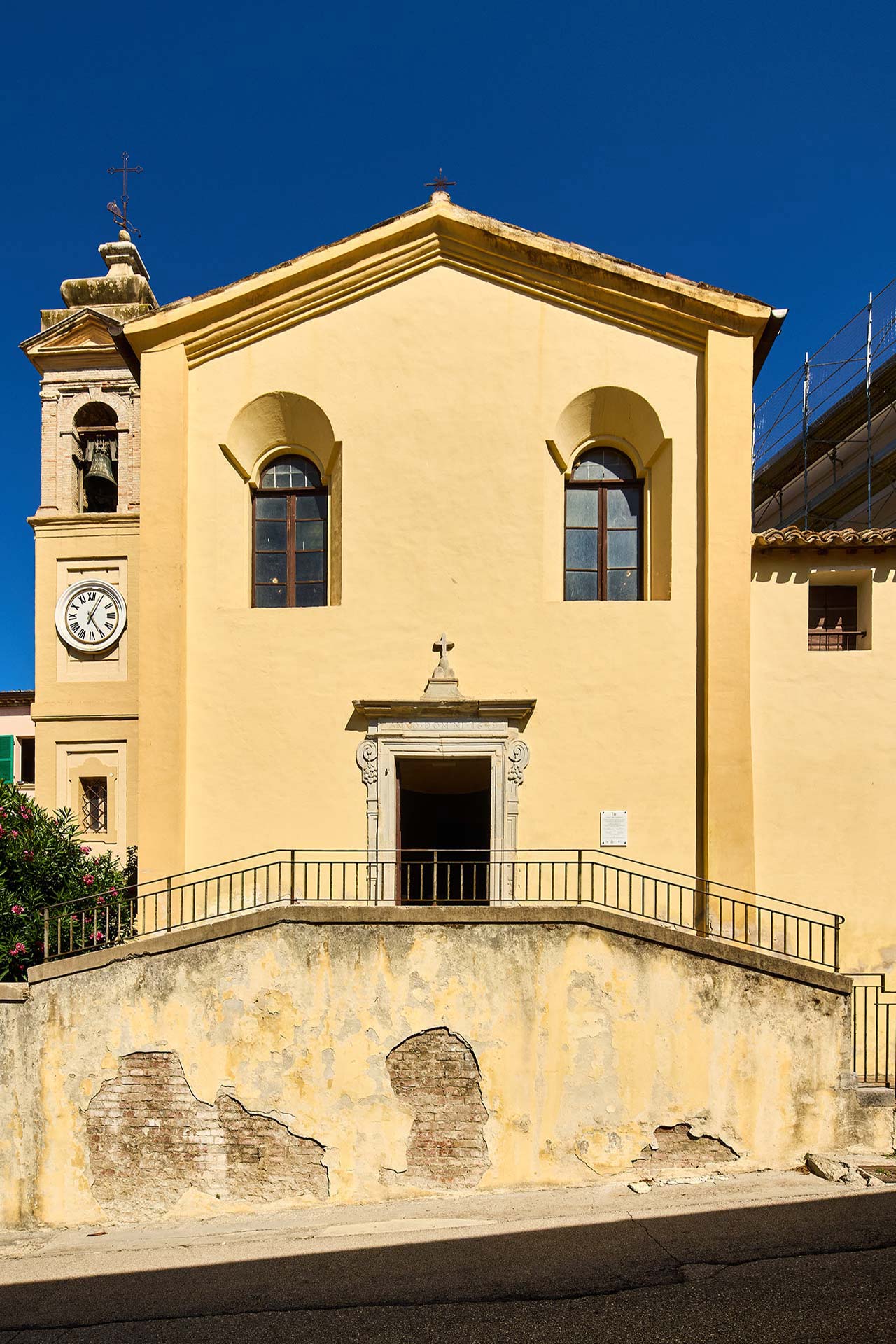
Outside the walls, stands the prestigious "Church of the Gonfalone", which thanks to the renovations of 1764 boasts elegant interior decorations in late Baroque style with stucco and painted ceiling. It is located in the historic center of Saltara. It owes its name to the brotherhood of the same name, also known as the SS. Crucifix. Records of the church date back to the 16th century, but it was in 1764 that the interior took on a late Baroque appearance, with stucco and a painted ceiling imitating those with carved wooden coffers. Above the high altar is a large canvas depicting the Deposition of the Cross, from the early ‘500s and attributable to Perugino's workshop (Alessandro Marchi, in PIERMATTEI 2014). At the two side altars there is a painting by Guerrieri depicting the Virgin and Child with St. Anthony of Padua and the Assumption of the Madonna by an unknown author. The bell tower was rebuilt in 1788. Until a few years ago the bell tower was in a precarious state and part of the roof even collapsed. During the restoration, completed in 2013, a large fresco from the late ‘400s - early ‘500s depicting the Last Judgement emerged on the back wall. Last Judgement (Fresco on the counter-façade 1482-1495) attributed by A. Marchi to Stefano Folchetti of San Ginesio, recognizing the fresco's possible influences.
CHURCH OF SAN PIETRO CELESTINO
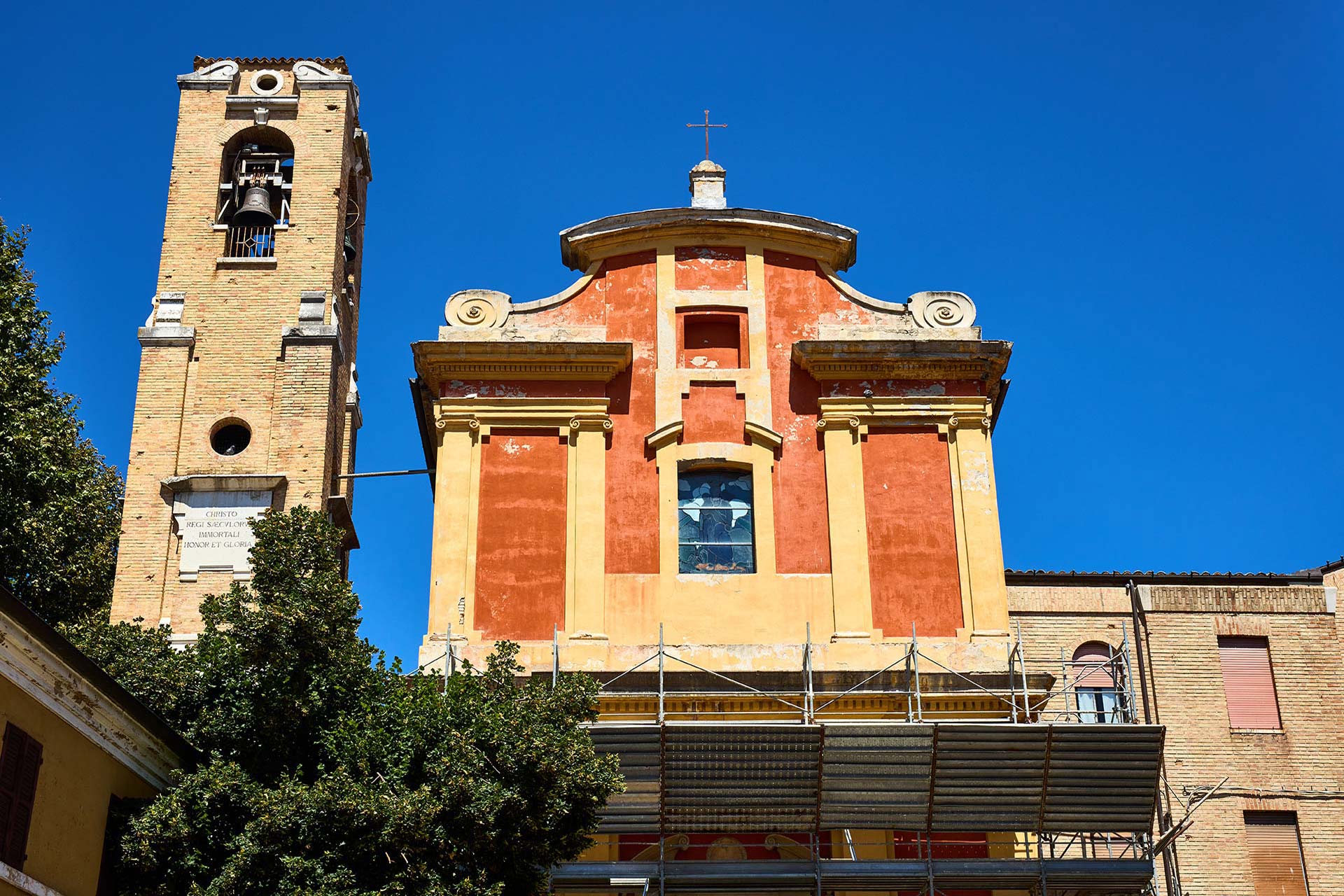
Church of San Pietro Celestino, seat of the parish of St John the Apostle. The church is dedicated to Pietro Murrone, a Calabrian monk proclaimed Pope under the name of Celestine V, who was present in the Processions on the occasion of someone's death. The church was, until 1819, the seat of the convent of the Celestine fathers; it was then donated to the parish of San Giovanni, whose church (later Ospedale Morioni 1833), which was within the castle walls, was in a dilapidated condition at the time. The Celestines abandoned the church and convent at the time of the Napoleonic suppression. It was once the seat of the Confraternity of Our Lady of Sorrows, the only confraternity in Saltara composed exclusively of women. The church has a single nave with two altars against the left wall and two against the right wall. The nave and apse are naturally lit by windows with coloured stained glass placed above the entablature that runs the length of the church in neoclassical style with stucco decorations, barrel vaulted with veils and two side altars on each side. The Baroque façade is marked vertically by two registers of pilasters and is enlivened by volutes and cornices and gables with curved or broken lines. The side bell tower rebuilt in Art Deco style stands on the left, detached from the body of the church.
MOS HALL - MOSAIC MUSEUM
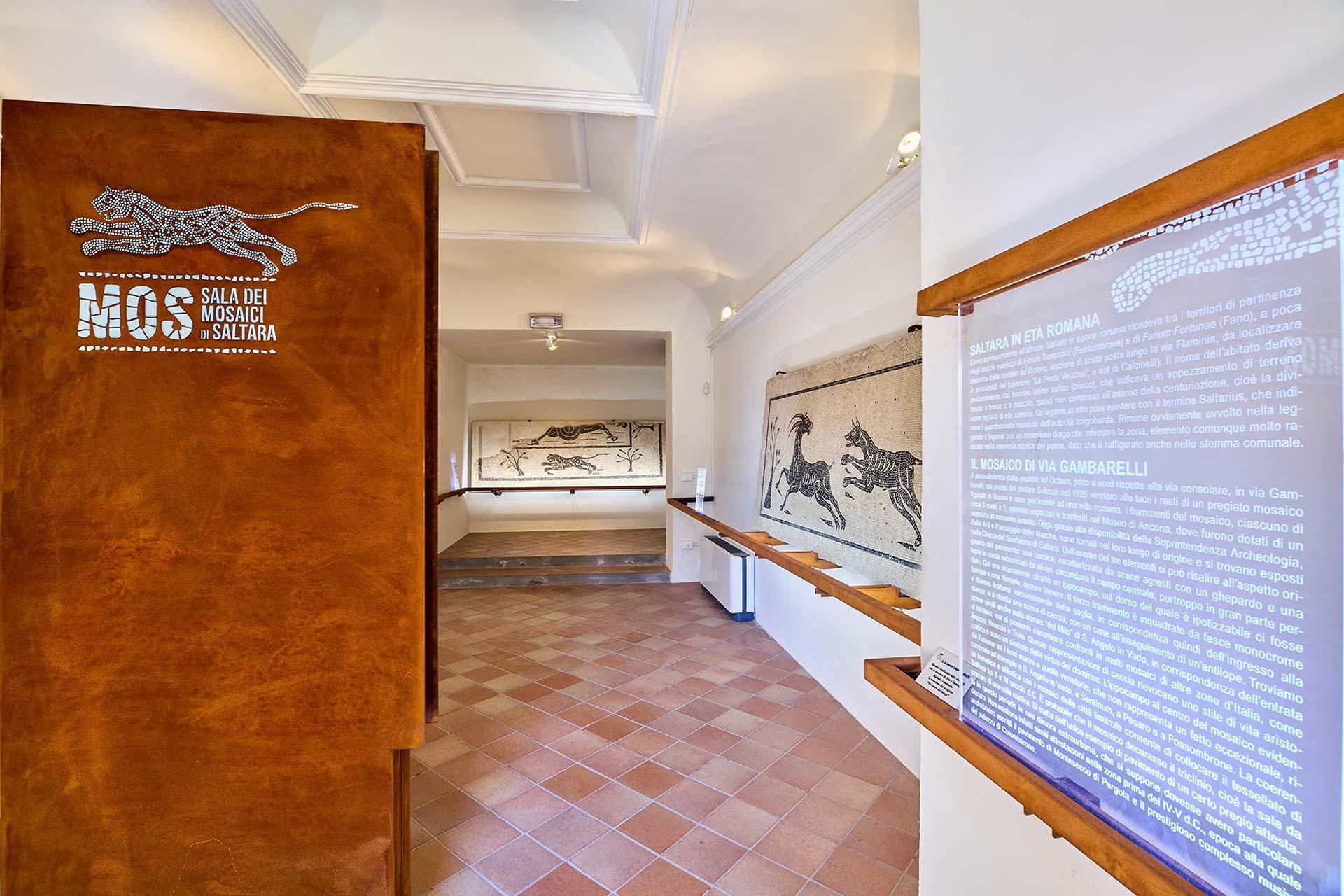
Saltara Mosaic Hall, houses and enhances, giving back to the community an important pessa of its history: the mosaics resulting from findings in the Gambarelli locality in Saltara. On November 27, 1927, the parish priest of Saltara, a small town in the province of Pesaro and Urbino, reported the discovery of buried ruins: it was not clear what they were, but the stone tesserae scattered in the plow furrows hinted at a Roman building, perhaps a prestigious one. The Superintendent's Office then organized an excavation campaign: remains of rooms, corridors, and a room adorned with a mosaic of triton and exotic animals emerged, unfortunately already eroded by agricultural work. Today, thanks to a project of the Municipality shared with the ABAP Superintendency of Marche, the University of Urbino and the Polytechnic University of Marche, financed by the Marche Region and supported by the Rotary Club of Fano, it is possible to admire the mosaics in a new multimedia display, curated by Studio Panni of Fano and DMP of Senigallia. The mosaics-including one of a panther and the splendid one of a wolf attacking a goat-are visible every Sunday.
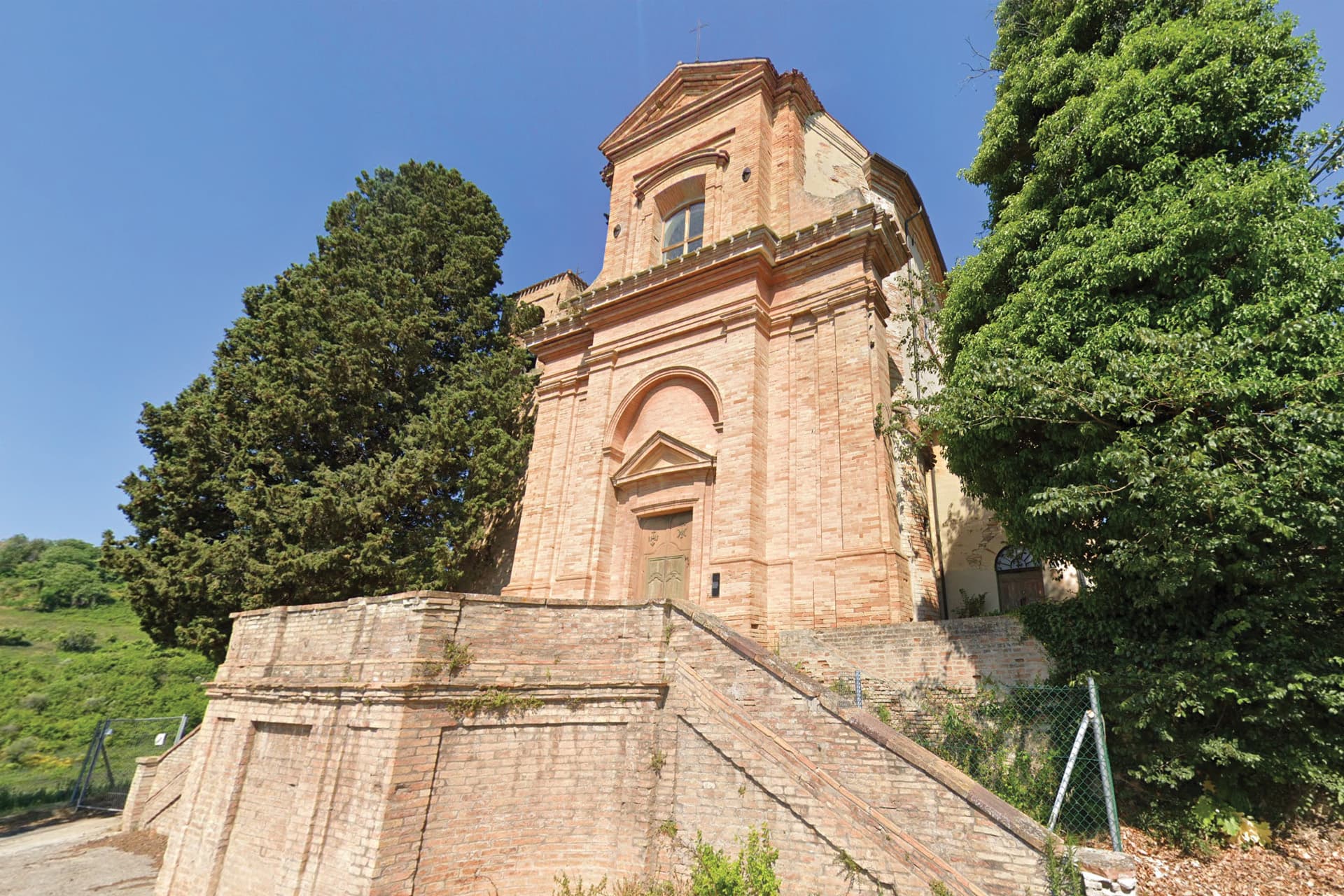
SANCTUARY OF MADONNA DELLA VILLA
The “Sanctuary of Our Lady of the Villa” (1790), featuring an octagonal plan and an imposing staircase and parapet by Prospero Selvelli of Fano; the interior housed a valuable period organ. To date, the damaged church is closed pending restoration.
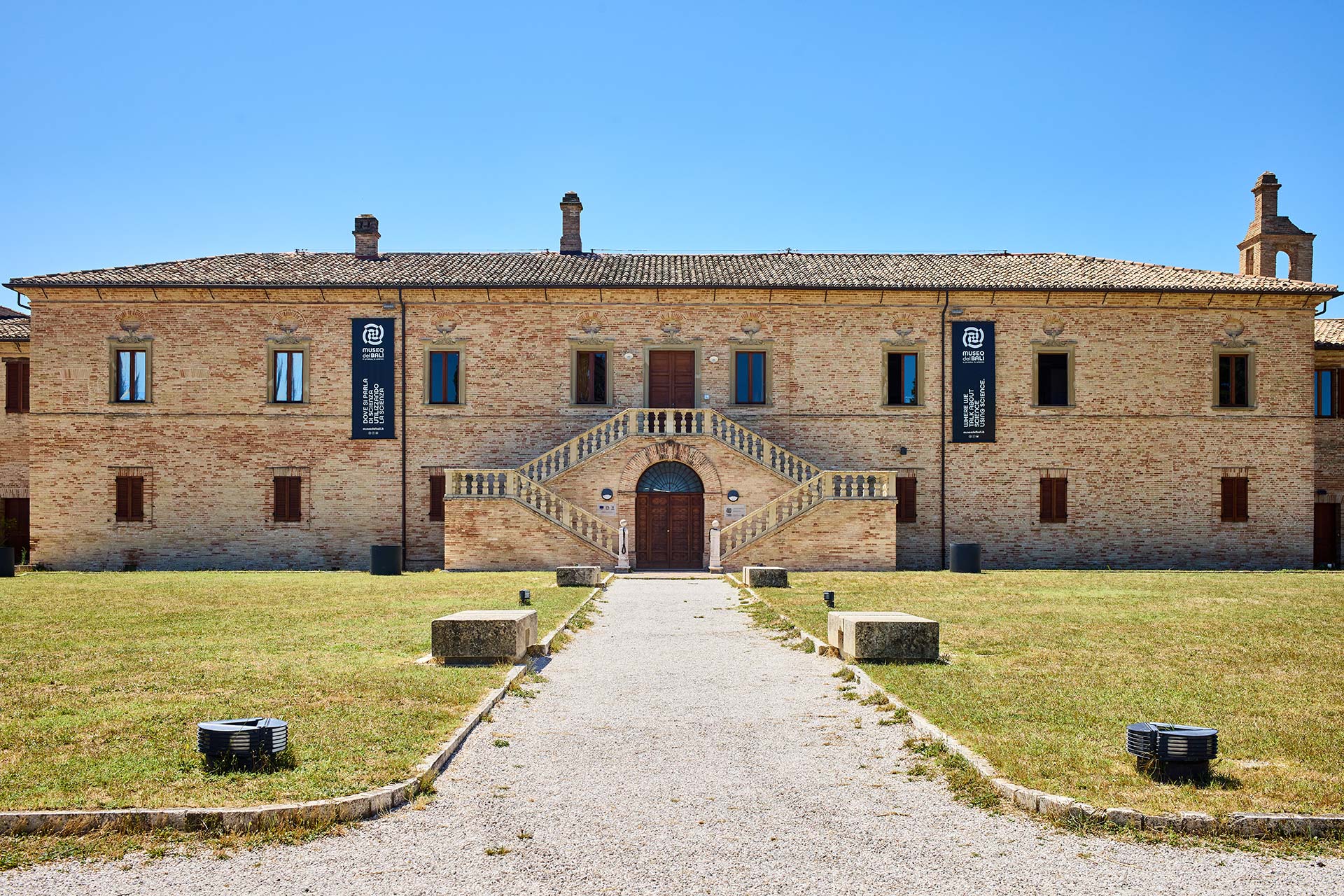
BALI MUSEUM
The Temple of Science: The Balì Museum Saltara's crown jewel is located just outside the city center: the Villa del Balì. The Villa: It is a majestic building with an incredible history. Built on an ancient temple dedicated to Mars, it became a bishop's residence and then a private observatory in the 16th century. Its terraces were used by nobles to gaze at the stars centuries before it became a museum. No Touching: This is the museum's rule. You won't find dusty display cases, but dozens of interactive stations where you can experiment with physics, light, and sound waves through play. The Planetarium: Under the dome of the digital planetarium (one of the best in central Italy), you can take virtual journeys into deep space, guided by expert astronomers.
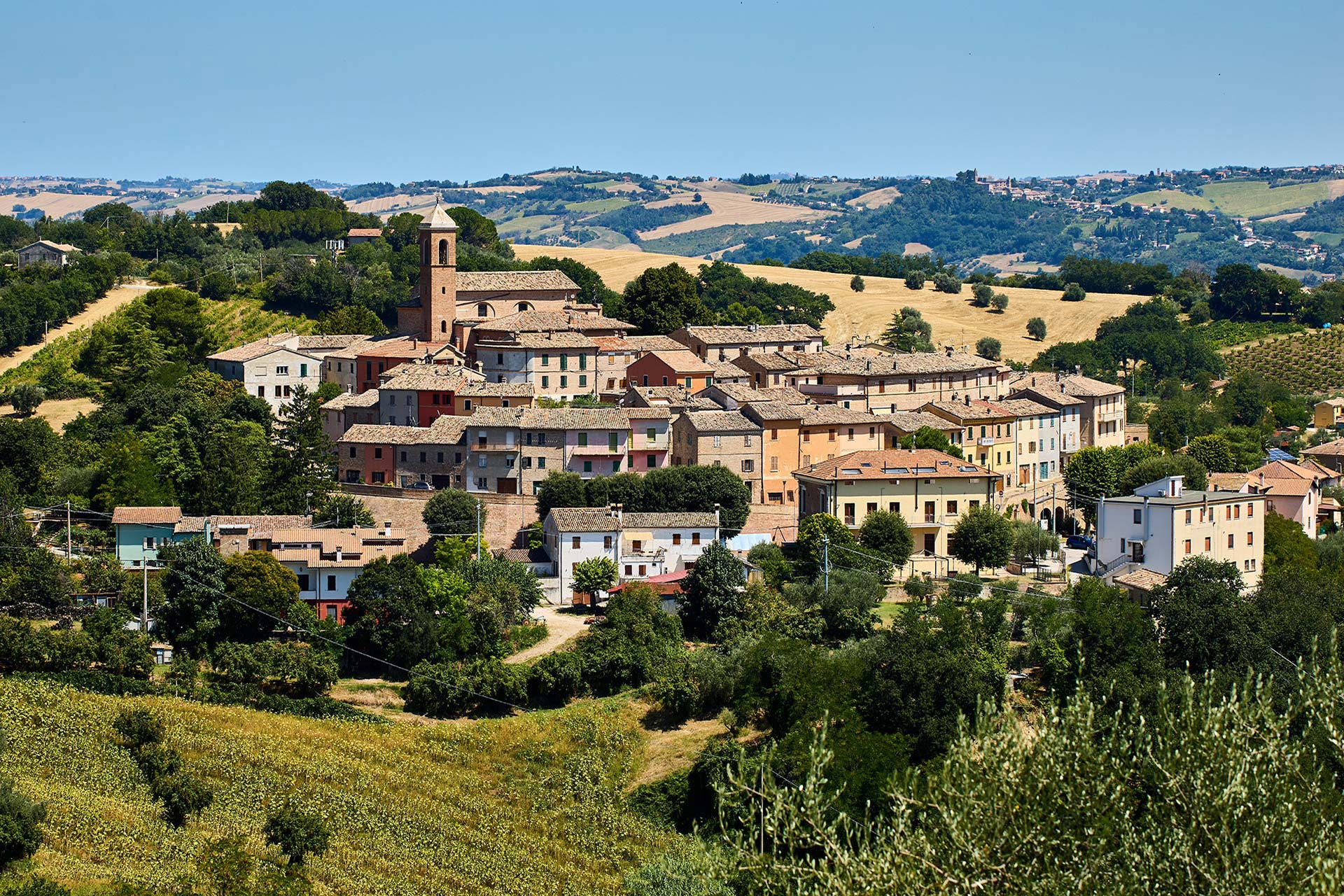
HISTORIC VILLAGE OF Serrungarina
Serrungarina is a hamlet of Colli al Metauro, a municipality with more than 12,000 inhabitants in the province of Pesaro and Urbino, established on January 1, 2017 following the merger of the municipalities of Montemaggiore al Metauro, Saltara and Serrungarina. In ancient times there were two castles, Brisighella, which was destroyed in the 16th century, and the present Serrungarina attested since 1250; the name derives from being built on a hill ridge, Serra, while the name Longarina from the personal name Longarinus. In 1343 Serrungarina came under the rule of the Malatesta family, who built the fortress, which was destroyed in 1462 after their expulsion. The historic center of Serrungarina preserves its fortified circuit and narrow alleys almost intact, gathered around Piazza Serafini, adorned by a centuries-old linden tree. The striking staircase, Malatesta cistern and noble palaces, such as Palazzo Cinti with a 17th-century arched portal, can be admired. The Church of Sant'Antonio Abate houses several masterpieces of pictorial art, one by Giovanni F. Guerrieri “The Visitation” (1620), one by Giuliano Persciutti dedicated to “The Immaculate Conception” (1560) and another by Giuseppe Ceccarini da Fano “The Holy Family” (late 1700s). Adjacent to the church is a large mechanized Nativity scene, which attracts numerous visitors during the Christmas season and beyond. Downstream, in the hamlet of Tavernelle, the remains of the Via Consolare Flaminia from 220 B.C. and a Roman Taverna, a kind of farm-hotel, a place of production and processing of agricultural products and refreshment for travelers, are visible. One cannot talk about Serrungarina without mentioning its main product, the tasty Pera Angelica, brought to the table in a thousand ways, including grappa.
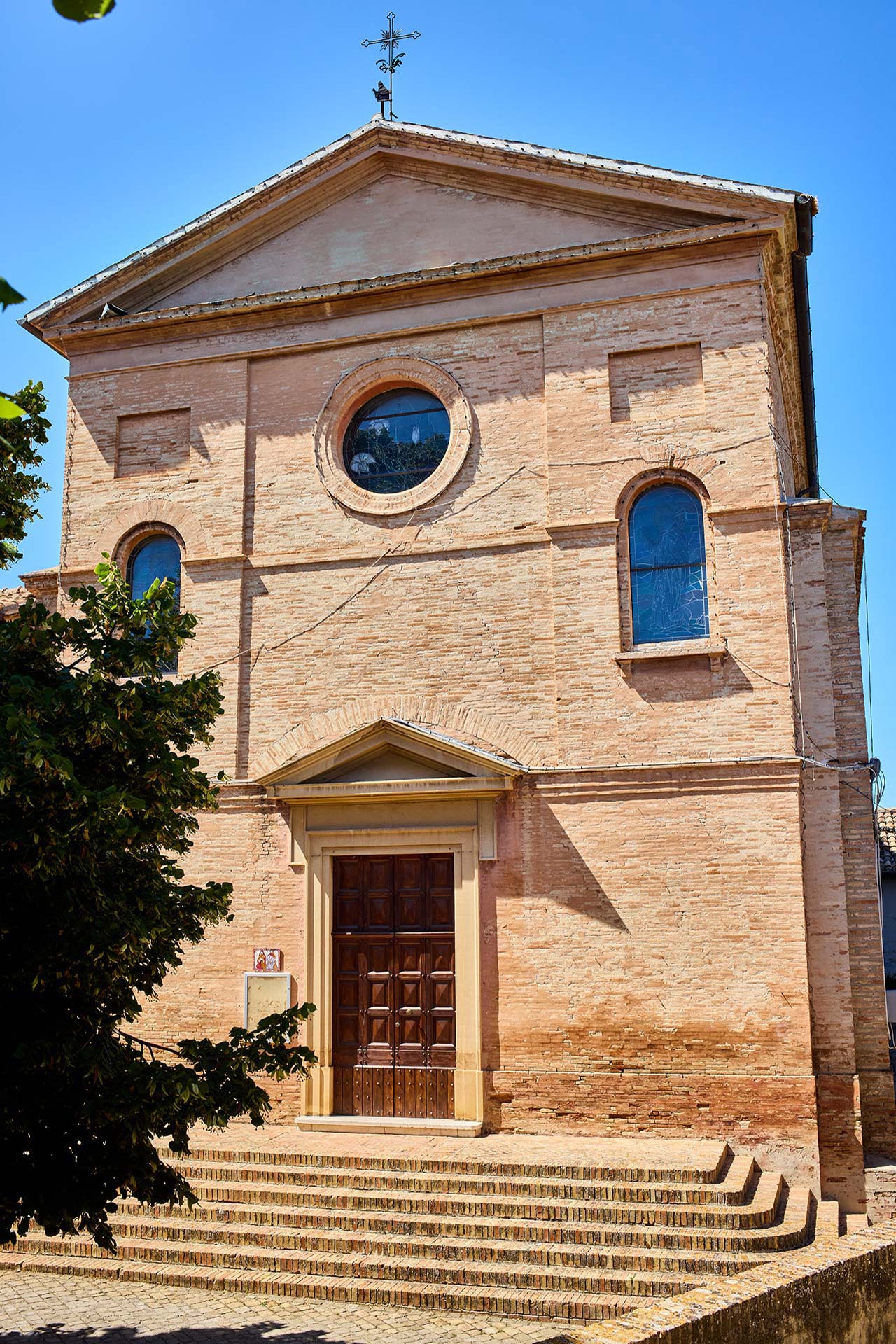
CHURCH OF SANT'ANTONIO ABATE
The church of St. Anthony Abbot was built in 1665 in the center of the castle of Serrungarina. It is the present parish church, rebuilt several times over the centuries. Located in the heart of Serrungarina, in Piazza Serafini, the Church of Sant'Antonio Abate was built in 1665 on the site of the Malatesta Tower (the previous church was outside the walls), which was demolished in 1866 and rebuilt in 1870. Inside the church, there are two paintings of remarkable artistic merit: the Immaculate Conception by Giuliano Presutti of Fano (around 1560) and the altarpiece depicting the Visitation by Giovanni Francesco Guerrieri from Fossombrone (around 1620). This is the current parish church, rebuilt several times over the centuries in the area of the ancient fortress that was constructed by Galeotto Malatesta in 1348. Bishop Lapi, in 1610, found the church almost completely demolished, including most of the roof. In the homily held in the ancient parish church of San Giovanni, the bishop urged all the men of the castle to contribute to the construction of the new Sant'Antonio building. The work was completed in 1665, also utilizing the ruins of the ancient fortress, which had made that castle, on the borders of the Fano countryside, one of the best fortified. The church has a masonry structure and is flanked on the left by the building that housed the former Municipality of Serrungarina; the right side, however, is free. The seven-step staircase of the churchyard leads to the tympanum portal that characterizes the exposed brick façade and gable roof. Above the entrance door is a glazed oculus framed by two arched windows placed on either side at mid-height; at the top, the façade concludes with a triangular pediment. At the rear on the left, the bell tower rises. The interior has a single nave covered with a segmental barrel vault. The lunettes of the ceiling house a total of four windows with stained glass depicting the Evangelists. Against the inner façade are the vestibule and the choir loft with a mirrored wooden parapet. Two chapels on each side, of different depths, open onto the assembly hall, housing a Crucifix, wooden altars, statues, and sacred paintings. On the left wall, between the first and second chapels, a small wooden pulpit is affixed. Two steps lead to the apse floor, which is semicircular and covered by a basin vault; behind the altar table, a wooden screen hides the sacristy door. The internal unity of the nave and the apse is achieved through the decorative architectural articulation of the pilasters and the entablature above.
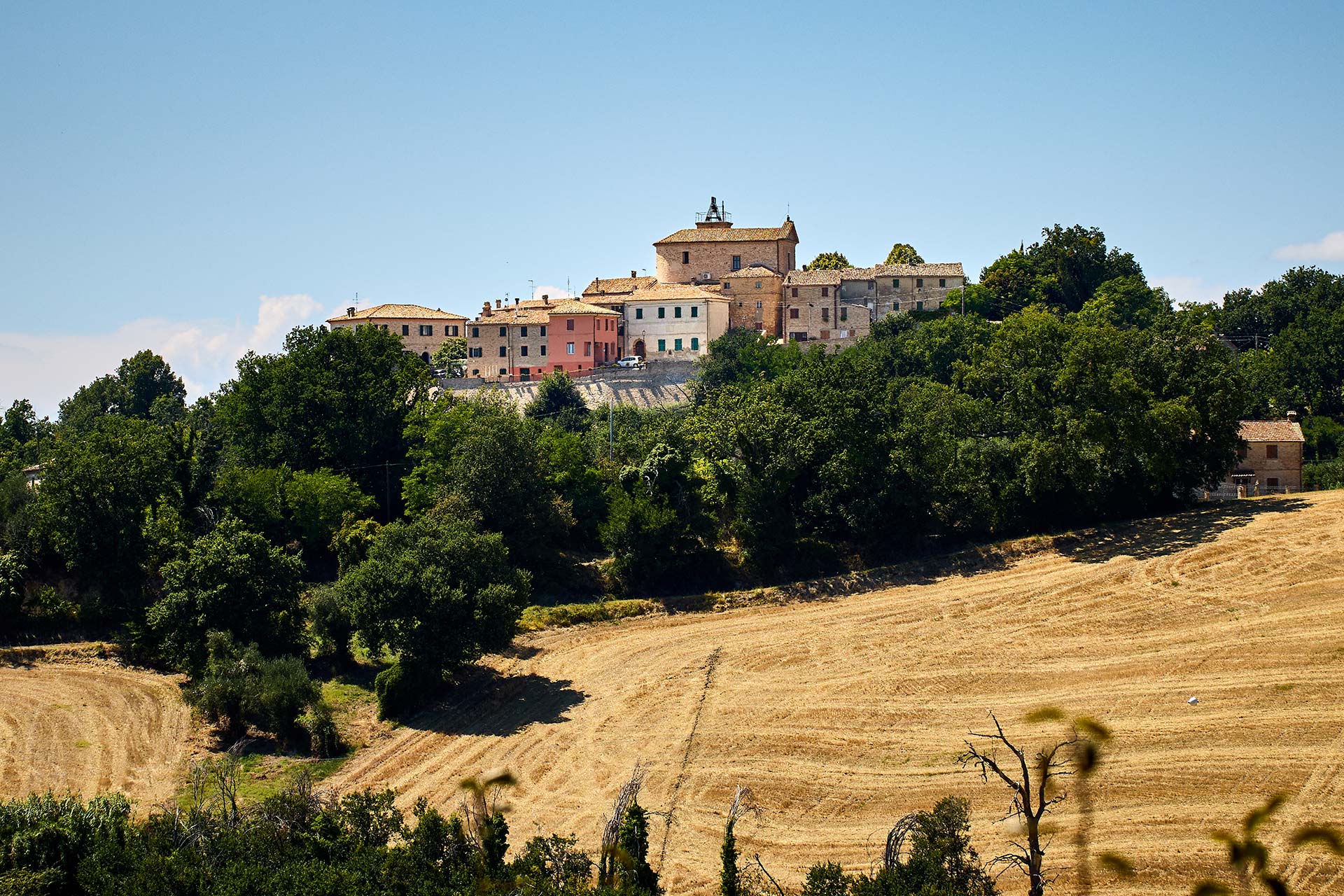
HISTORIC VILLAGE OF BARGNI
Bargni is situated in the hilly area about 1.5 km west of Serrungraina, at an elevation of 282 meters. The origin of bragni is unknown, and the etymology itself is uncertain: probably this settlement, like almost all other fortified centers in the area, arose shortly before the year 1000, as a result of the continuous struggles among feudal lords for possession of new lands.
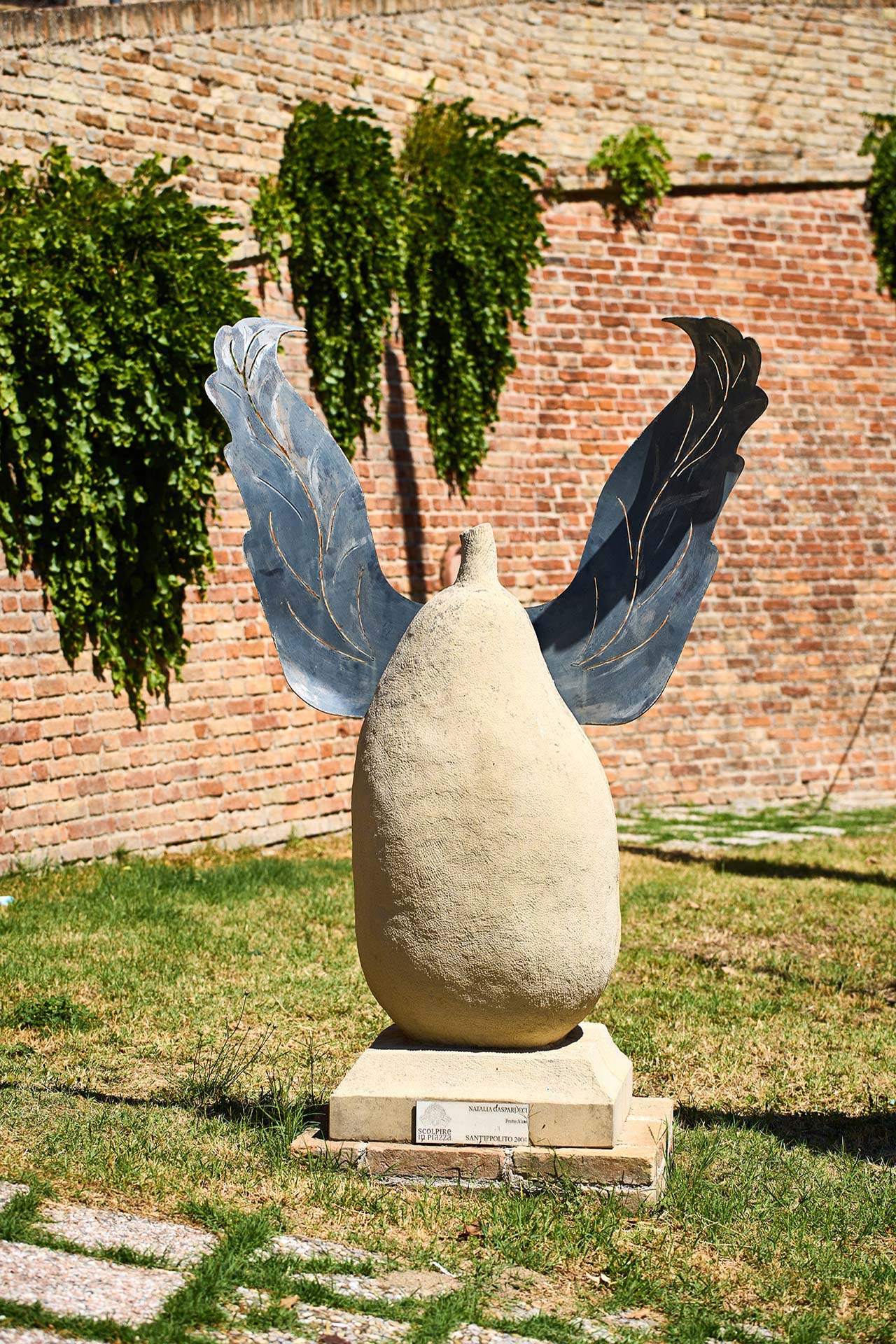
Angelica Pear
WINGED FRUIT sandstone sculpture dedicated to the Angelica Pear Festival. Sculpture located on the right side leading to the historic center. Made by the Stonemason of Sant'Ippolito Natalia Gasparucci in 2004.
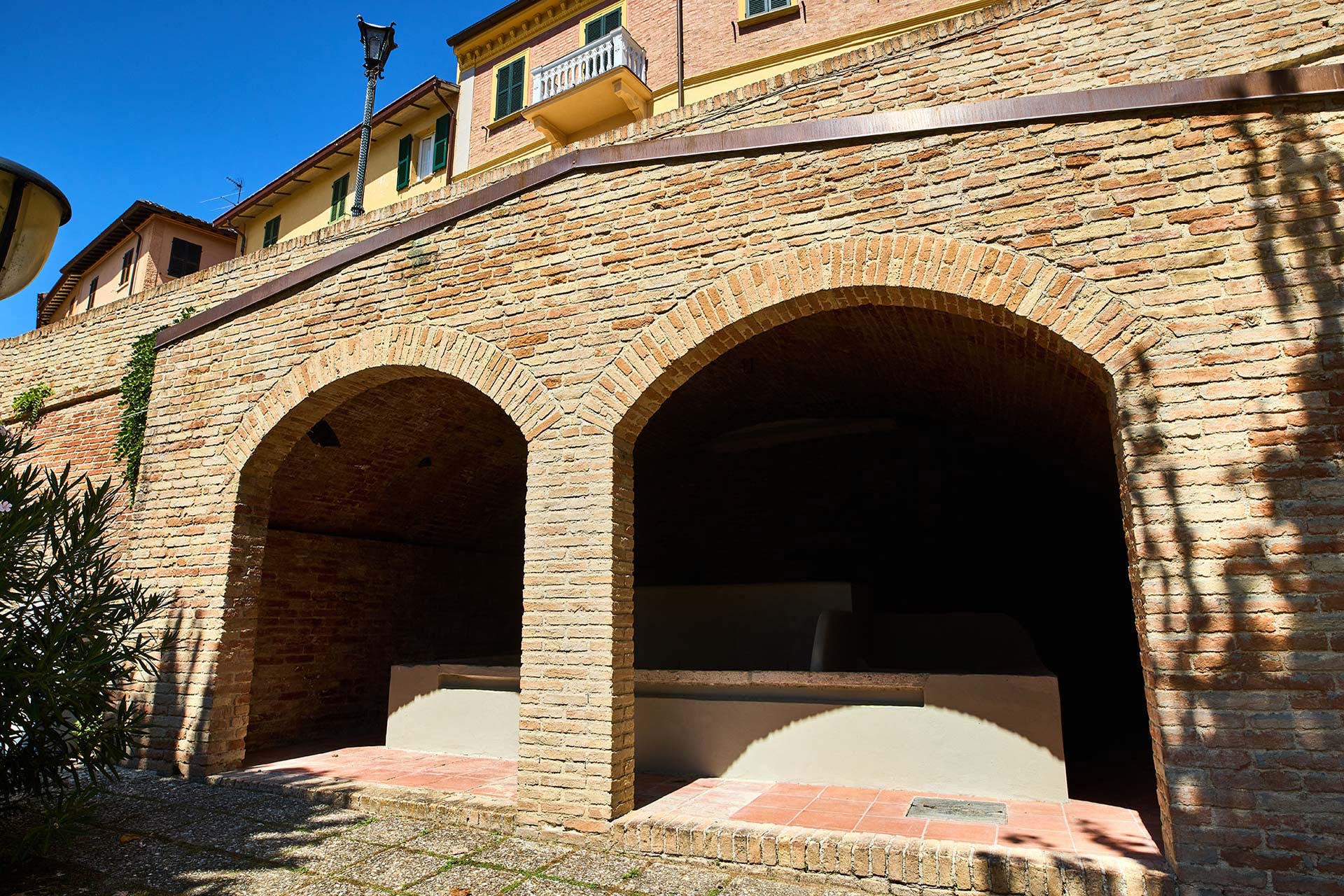
FORMER WASHHOUSE OF SERRUNGARINA
The building is located in the southern vicinity of the entrance to the historic center of Serrungarina, nestled under the city walls close to the main road. There is no documentary evidence on the date of construction of the space but it is certainly coeval with the construction of the city walls. The water supply of the washhouse was done in a noncontinuous manner given the iniesistence of sources close to the site: water was ensured by gravity from a pipeline connected to the overflow of a rainwater collection cistern located in the upper part of the historic center. Currently under restoration.
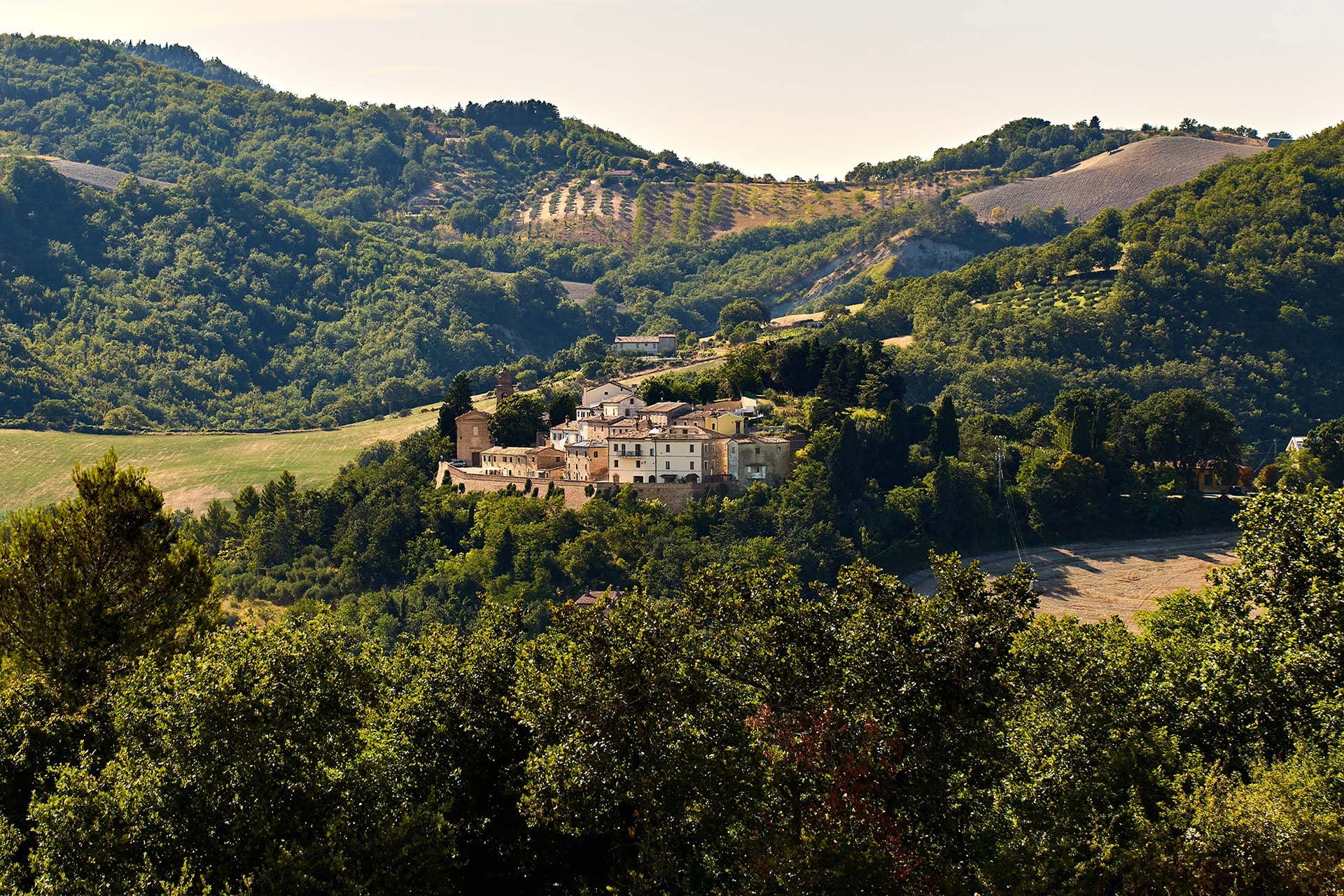
HISTORIC VILLAGE OF POZZUOLO
Pozzuolo is located in a hilly area about 3 km north of Serrungarina, at an altitude of 325 metres. Its name derives perhaps from the presence of a small spring of sulphurous water. In 1283, it was part of the “castles on this side of the Metauro” subject to the city of Fano. The town has retained its appearance of a small medieval village gathered around its church dedicated to St Paternian (17th century), the town's patron saint. Along the road leading to Pozzuolo, 700 metres before the village, is the Church of the Madonna della Pertica, with the image of the same name carried in procession on the second Sunday in October.
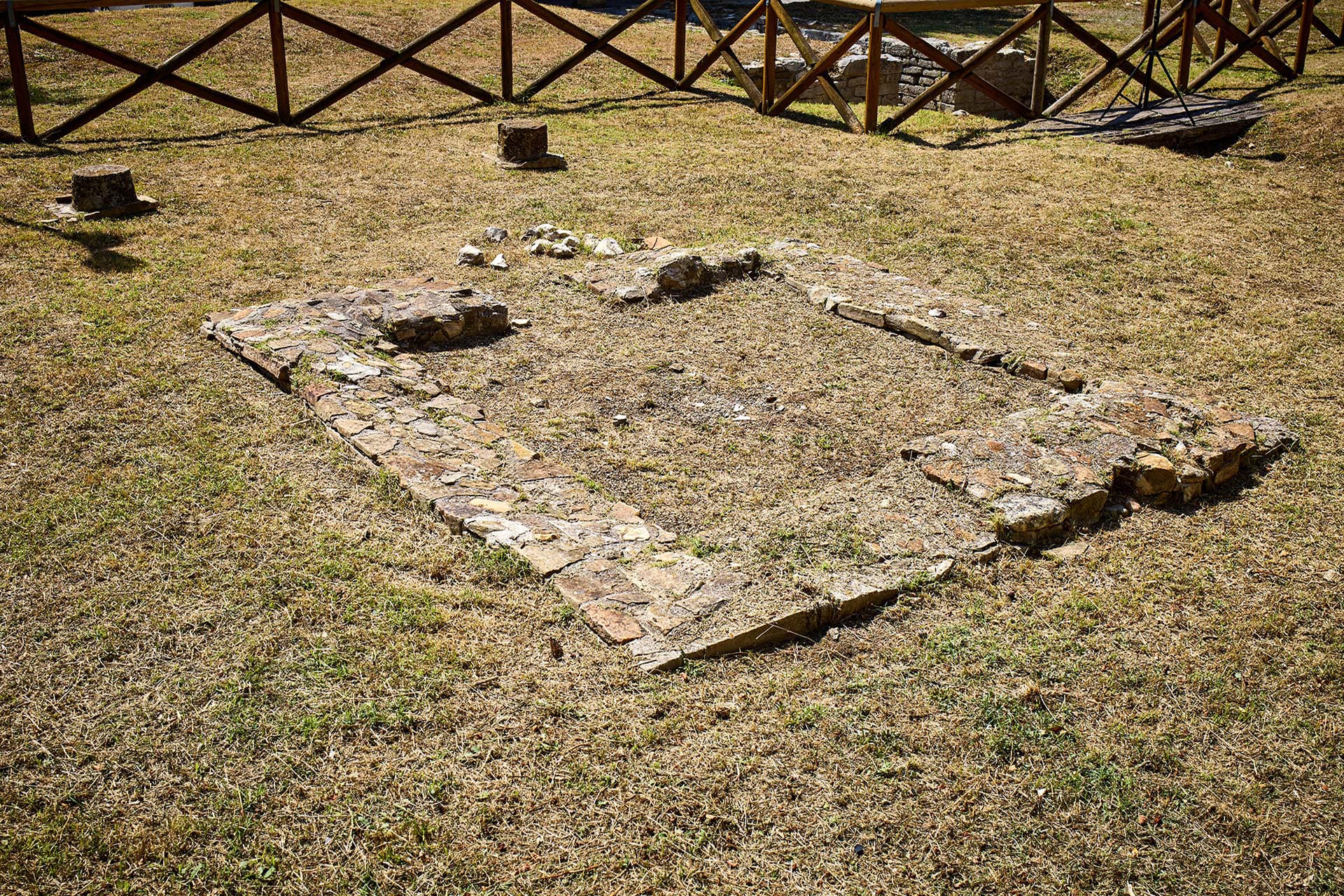
Tavernelle archaeological area
Along the Flaminian Way in the locality of Tavernelle, a place that derives its name from the Latin word TABERNULAE (small taverns), archaeological finds have been discovered in the area of the present parish church where a small antiquarium has also been created. From antiquity, this small center served as a crucial stopping point—a place of rest and refreshment for travelers and their horses along the Flaminia consular road, specifically the stretch between Fossombrone and Fano. This historical role has been corroborated by archaeological discoveries in the area of the current parish church, where a small antiquarium has been established. (Some findings, including a marble head of Attis, are preserved in the Museum of Forum Sempronii – Fossombrone). The unearthed archaeological structures clearly reveal the presence of a farm-inn (fattoria-albergo). This was a place that produced and processed agricultural goods while simultaneously offering accommodation and sustenance to travelers. Of particular interest is the discovery of a small temple (Sacello) dedicated to Attis, the Phrygian shepherd beloved by the goddess Cybele and who became her priest. This location lies along the ancient Via Flaminia, the main Roman road artery that, crossing the entire Province of Pesaro and Urbino, connected Rome to Rimini (Ariminum). The construction of this consular road, intended to link Rome with northern Italy, began in 220 BC under the direction of Gaius Flaminius Nepos. The main branch of the Flaminia traversed the Apennines via the Scheggia Pass and followed the Burano Valley to reach Luceolis (Cantiano) and the vicus Cale (Cagli). After the Furlo Tunnel—commissioned by Emperor Vespasian—it descended along the Metauro Valley, passing through Forum Sempronii (Fossombrone), the mutatio ad Octavo (near Calcinelli in the Municipality of Colli al Metauro), before reaching Fanum Fortunae (Fano), Pisaurum (Pesaro), and then Ariminum (Rimini).
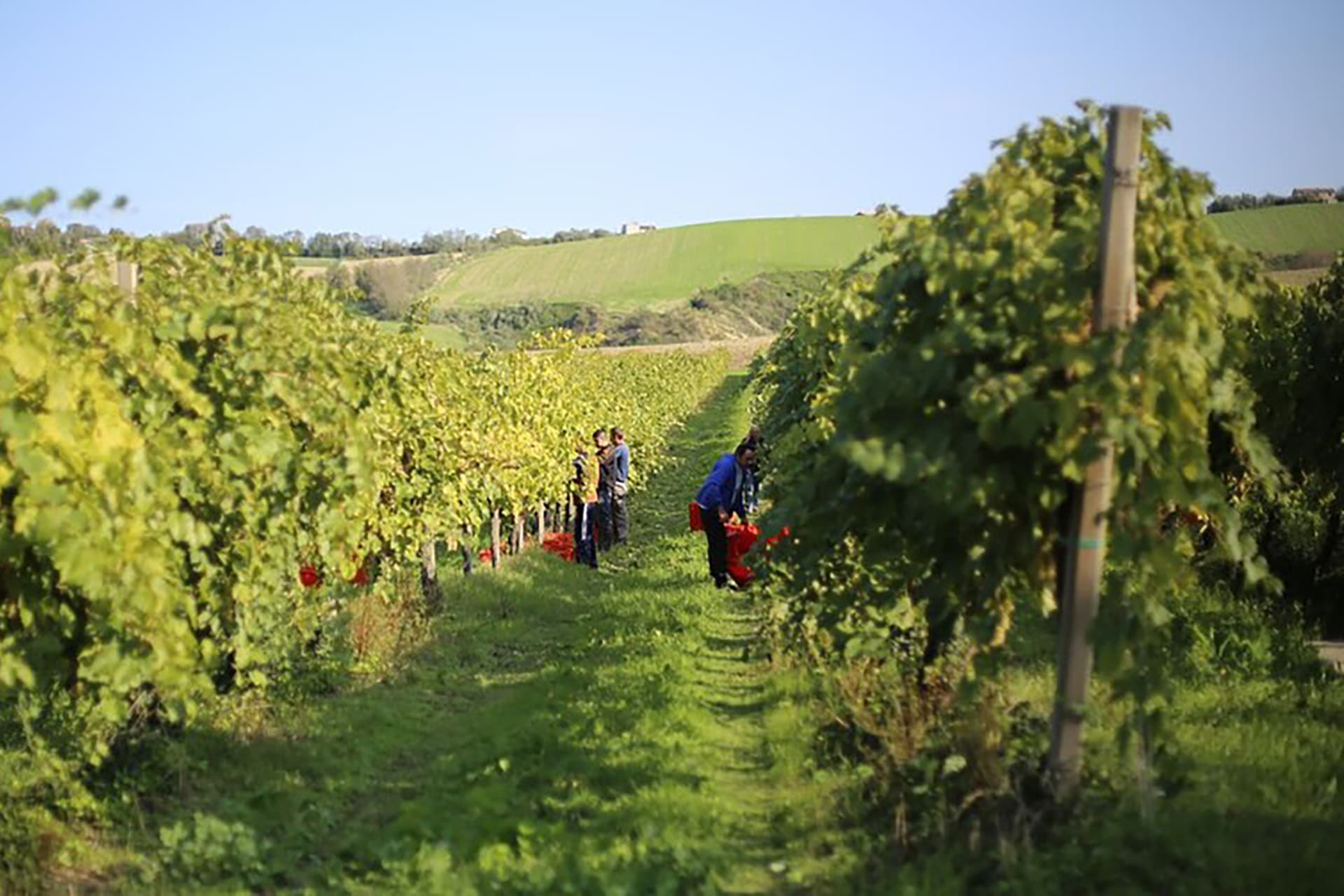
Wineries
For wine lovers, a visit to Azienda Agricola Mariotti Cesare is a must. Founded in 1930 in Sant’Antonio di Montemaggiore, in the heart of the Metauro Valley, the Mariotti Winery represents an agricultural enterprise deeply rooted in local tradition. The estate cultivates about 11 hectares of vineyards and 3 hectares of olive groves, producing DOC and IGT wines, grappas, and single-varietal olive oils made from the Leccino and Raggiola cultivars. Both white and red wines are crafted from native grape varieties and carefully selected grapes, with the aim of preserving the authentic character of the Marche region.
-
Mariotti Cesare Agricultural Company
- Tel: 346 0292041
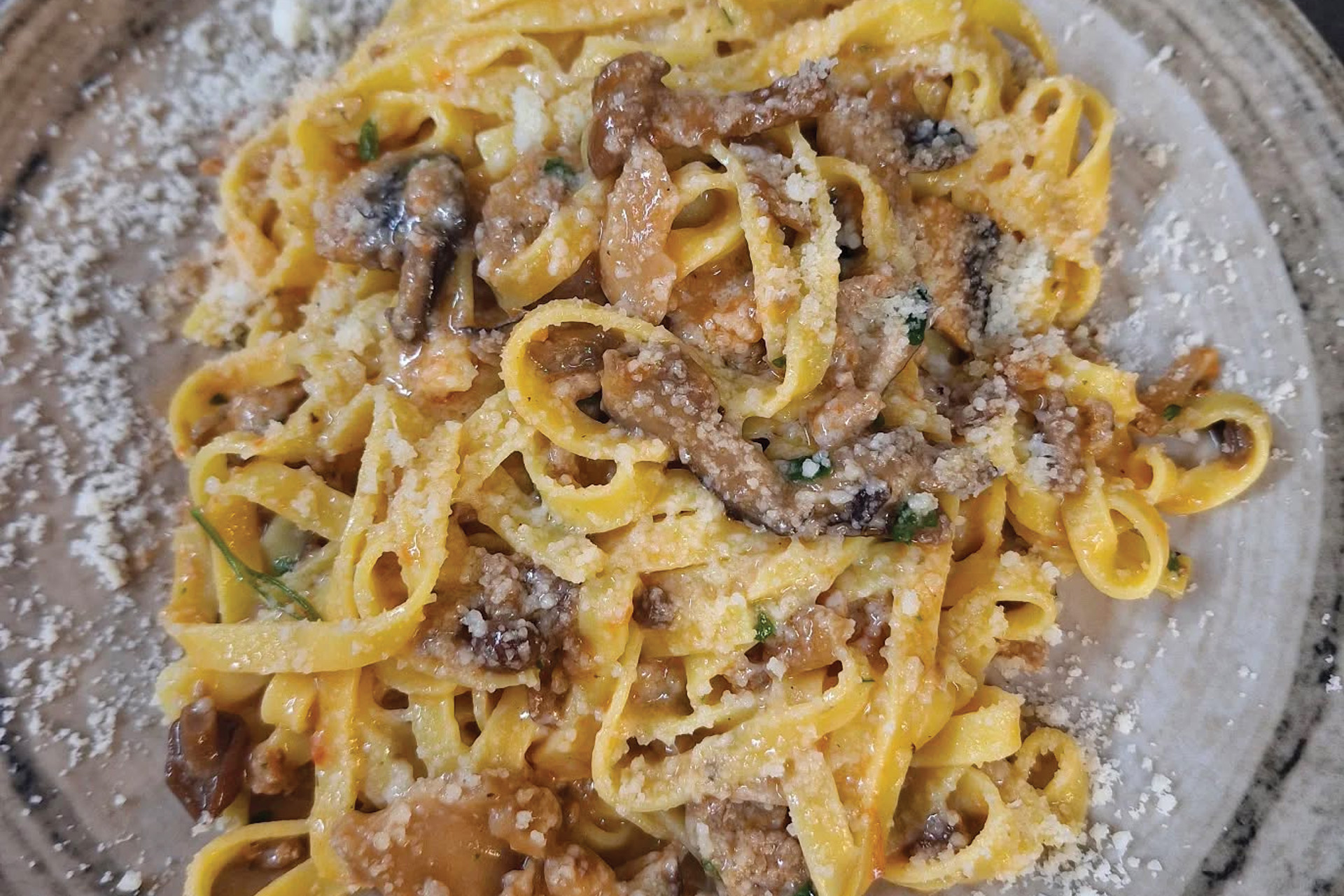
Taste
A stop to enjoy the excellent food and wine or simply for a good coffee is a must. There are numerous options, varying depending on which village you find yourself in during your itinerary: from Ristorante Al Mandorlo in Colli a Serrungarina to Ristorante Valle del Metauro in Montemaggiore al Metauro, as well as other local establishments ready to welcome visitors with typical flavors and traditional cuisine.
-
Al Mandorlo
Via Tomba, 57, 61036 Colli al Metauro PU - Tel: 0721 891480 -
Civico 68
Via Ponte Metauro, 88, 61030 Colli al Metauro PU - Tel: 0721 895646 -
Da Enry Restaurant
Via Flaminia, 54/57, 61030 Calcinelli, Saltara PU - Tel: 0721894187 -
Da Luisa Restaurant
Via Roma, 8, 61036 Serrungarina PU - Tel: 348 671 9957 -
Da Matteo Restaurant
Piazza Bramante, 8, 61030 Montemaggiore Al Metauro PU -
Da Peppe Calcinelli Tavern Piadina shop
Piazza Pio Franchi de Cavalieri, n 3, 61036 Calcinelli PU - Tel: 072134061 -
La Cantinaza
Via San Liberio, 48, 61036 Colli al Metauro PU - Tel: 0721 895904 -
La Tagliata
Strada Provinciale Mombaroccese, 19/a, 61030 Colli al Metauro PU - Tel: 0721 893009 -
Pantalin Restaurant
Via Giovanni Agnelli, 2, 61030 Colli al Metauro PU - Tel: 0721 1795930 -
Posta Vecchia Restaurant
Via Flaminia, 18/20, 61032 Colli al Metauro PU - Tel: 0721 897800 -
Posto Pubblico
Via Abruzzo, 1, 61036 Colli al Metauro PU - Tel: 0721891463 -
Valle del Metauro Restaurant
Via Roncaglia, 24, 61030 Montemaggiore Al Metauro PU - Tel: 0721 892084
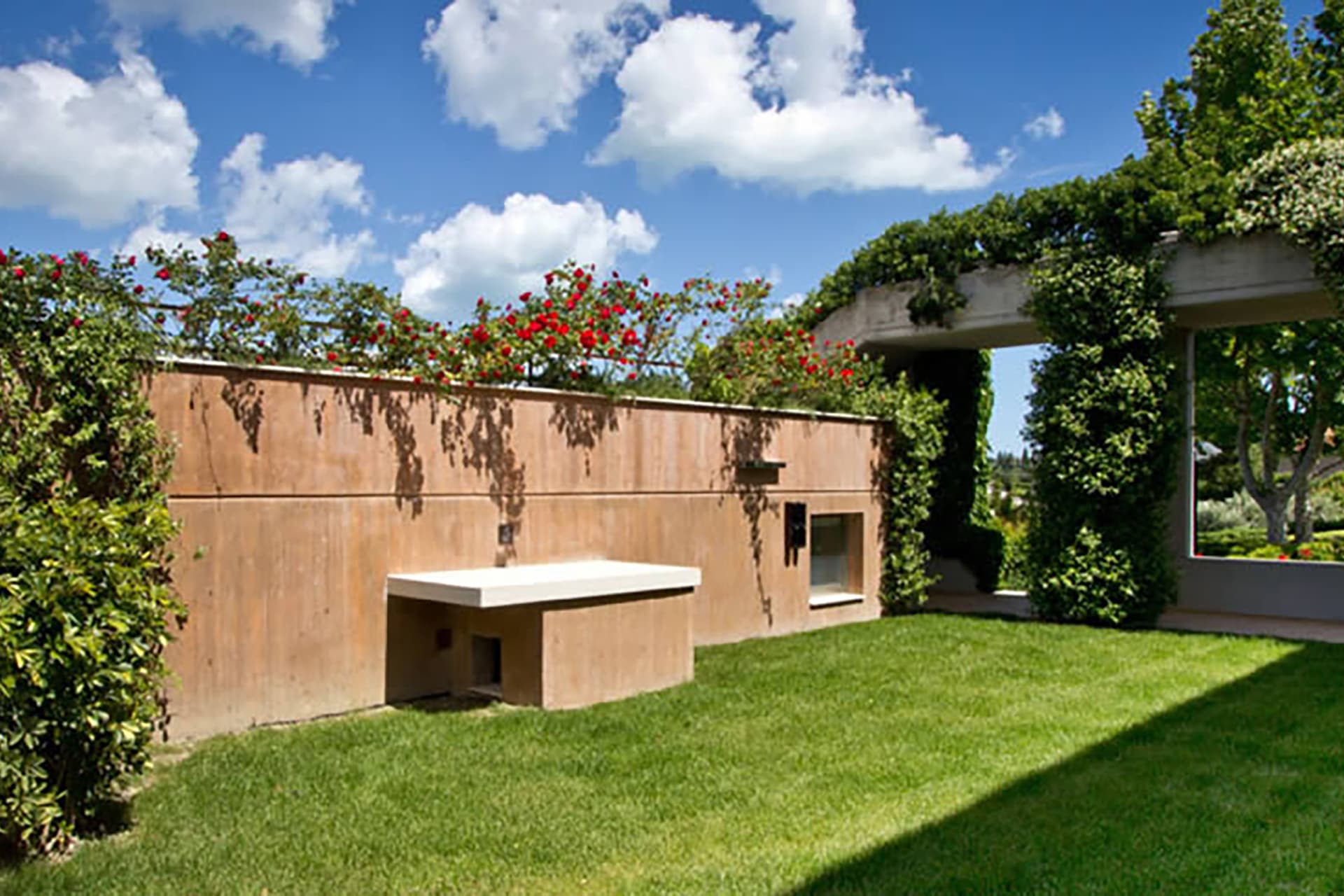
Shopping
For those who wish to take home a souvenir of the area or purchase typical products, recommended shops include Azienda Agricola Pozzuoli and Fiori e Piante Regini, local businesses offering gastronomic specialties and artisanal products linked to the traditions of the villages of Colli al Metauro.
-
Berloni Giuliano Organic Farm
Via San Francesco s.n., 61036 Colli al Metauro PU - Tel: 0721891202 -
Cincini Fabio Farm
Via Giacomo Leopardi, 8, 61030 Tavernelle PU - Tel: 338.7471954
Other Information
Categories
A piedi, Automobilistico
Territori spiegati in Viaggio nei borghi di Colli al Metauro - CUP J51C24000420004 - Questo intervento è stato realizzato con il contributo di 45.000€ dell’Unione europea Bando POR FESR Marche 2021-2027 - Asse 1 - Azione 1.2.2 - Int. 1.2.2.2 Bando per “Servizi digitali integrati”



